Description
Overview
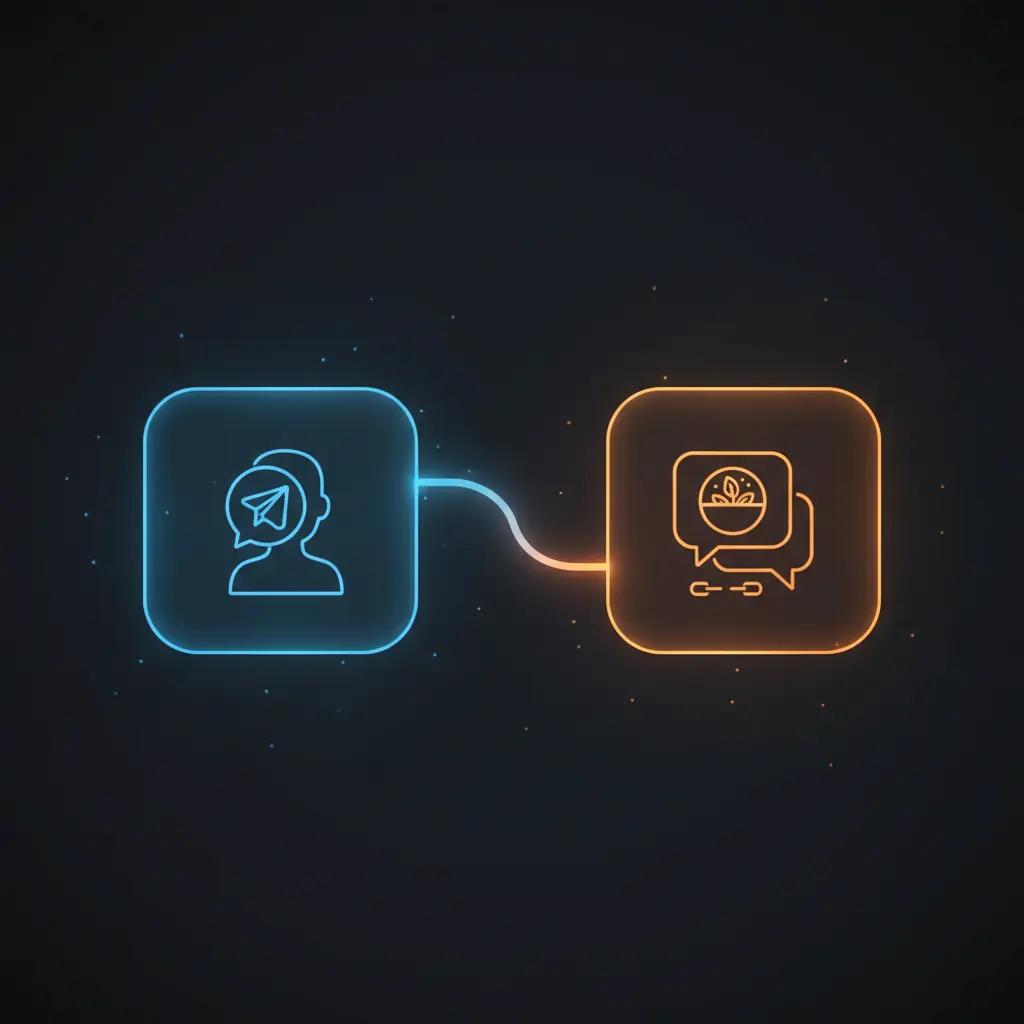
This vegan recipe distribution automation workflow leverages a no-code integration pipeline to deliver daily plant-based meal ideas via Telegram. Designed for Telegram bot administrators seeking seamless recipe broadcasting, it uses a cron-based trigger to send curated vegan recipes to subscribers stored in Airtable.
The workflow initiates on a scheduled Cron trigger and incorporates Telegram message triggers, handling chat ID management and recipe retrieval through HTTP API requests.
Key Benefits
- Automates daily vegan recipe delivery to Telegram chat subscribers using scheduled triggers.
- Manages subscriber data dynamically by querying and appending records in Airtable.
- Fetches fresh vegan recipes programmatically from Spoonacular API via HTTP requests.
- Ensures unique subscription by verifying chat IDs before appending to Airtable.
- Delivers multi-format content including recipe images and linked text messages.
Product Overview
This automation workflow integrates Telegram, Airtable, and the Spoonacular Recipe API to orchestrate daily vegan recipe distribution. It employs a Cron node as the primary trigger, configured to execute at scheduled intervals, initiating a sequence that retrieves subscriber chat IDs from Airtable’s “Table 1”. The workflow then performs HTTP requests to the Spoonacular API, fetching one random vegan recipe per execution.
New Telegram bot users are detected through a Telegram Trigger node listening to incoming messages. Upon user interaction, the workflow concurrently retrieves existing subscriber data from Airtable and sends a welcome message. An IF node evaluates whether the user’s chat ID is already present; if absent, the workflow appends the new subscriber’s chat ID and name to Airtable, ensuring data integrity and preventing duplicates.
Recipe delivery is multi-modal: it sends recipe images and accompanying text messages containing the recipe title and source URL. The synchronous delivery model uses Telegram nodes configured to send photos and text messages directly to individual chat IDs. Error handling is configured to continue on failure for Telegram message nodes, allowing partial message delivery without halting the full workflow.
Features and Outcomes
Core Automation
This event-driven orchestration pipeline handles subscriber onboarding and scheduled recipe broadcasts by leveraging Telegram triggers and a Cron scheduler. It uses conditional logic to check subscriber uniqueness and API calls to retrieve relevant vegan recipes.
- Single-pass evaluation of new user presence in Airtable before database update.
- Deterministic branching via IF node to prevent duplicate subscriber entries.
- Scheduled recipe dispatch ensures consistent daily content delivery.
Integrations and Intake
The workflow connects Telegram for user interaction and message delivery, Airtable for subscriber data management, and Spoonacular API for recipe retrieval. Authentication is handled using API credentials stored securely within n8n for each connected service.
- Telegram API used for real-time message triggers and message/photo delivery.
- Airtable API integration for listing and appending subscriber records.
- Spoonacular HTTP API fetches random vegan recipes with image and link data.
Outputs and Consumption
Outputs consist of Telegram messages sent directly to user chat IDs. Recipe data is formatted as photo messages followed by text messages including recipe titles and source URLs. This synchronous consumption model supports immediate user engagement.
- Telegram photo messages containing recipe images.
- Text messages with recipe title and source URL for further exploration.
- Payload keys include chat ID, image URL, recipe title, and source URL from API responses.
Workflow — End-to-End Execution
Step 1: Trigger
The workflow initiates either on a scheduled basis using the Cron node, configured to trigger recipe dispatch daily, or by Telegram Trigger node capturing new messages when users join the bot. The Telegram trigger listens specifically to message updates for new user detection.
Step 2: Processing
Incoming Telegram messages trigger parallel queries to Airtable to retrieve current subscriber data. Basic presence checks occur in the IF node to determine if the chat ID is new. New user data is prepared with a Set node mapping chat ID and first name for insertion into Airtable.
Step 3: Analysis
The IF node performs an exact string comparison between incoming chat IDs and existing Airtable records to identify unique subscribers. No machine learning or probabilistic models are employed, only deterministic string inequality checks to maintain subscriber uniqueness.
Step 4: Delivery
Recipe data retrieved from the Spoonacular API is delivered asynchronously to each subscriber via Telegram API nodes. Images are sent first, followed by textual messages containing recipe titles and source URLs. Telegram nodes are configured to continue on failure, ensuring partial delivery without complete workflow interruption.
Use Cases
Scenario 1
A Telegram bot administrator wants to onboard new users with an immediate vegan recipe. This workflow listens for new user messages, checks subscriber records, adds new users to Airtable, and sends a welcome message plus a vegan recipe. This ensures new subscribers receive personalized content immediately upon joining.
Scenario 2
For existing subscribers, the workflow uses a scheduled cron trigger to fetch and send a fresh vegan recipe daily. This removes manual effort from the administrator, providing consistent engagement by delivering recipe images and clickable source links to all stored chat IDs.
Scenario 3
A nutrition education project requires automated delivery of plant-based recipes to a Telegram group. This workflow orchestrates intake of subscriber chat IDs, recipe retrieval via API, and multi-format message dispatch, enabling scalable recipe sharing without manual intervention.
How to use
After importing the workflow into n8n, configure API credentials for Telegram, Airtable, and Spoonacular within the credentials manager. Set the Cron node schedule to the desired daily interval. Ensure the Airtable base and table match the workflow’s configuration, including field names for chat IDs and user names.
Activate the workflow to enable real-time listening for new Telegram users and scheduled recipe broadcasts. Monitor execution logs to verify API calls and message deliveries. Results include Telegram messages with vegan recipes sent to subscribers immediately upon joining and daily thereafter.
Comparison — Manual Process vs. Automation Workflow
| Attribute | Manual/Alternative | This Workflow |
|---|---|---|
| Steps required | Manual recipe selection and messaging for each subscriber daily. | Single automated pipeline handles subscriber management and daily dispatch. |
| Consistency | Variable timing and potential human error in message delivery. | Deterministic scheduling and conditional checks ensure reliable execution. |
| Scalability | Limited by manual effort and messaging platform constraints. | Scales with Airtable list size and API throughput without extra manual effort. |
| Maintenance | Requires daily manual updates and subscriber tracking. | Low maintenance with automated chat ID management and API-driven content. |
Technical Specifications
| Environment | n8n workflow automation platform |
|---|---|
| Tools / APIs | Telegram API, Airtable API, Spoonacular Recipe API |
| Execution Model | Event-driven triggers combined with scheduled Cron trigger |
| Input Formats | Telegram message updates, Airtable JSON records |
| Output Formats | Telegram photo messages, Telegram text messages |
| Data Handling | Transient API data processing; subscriber data persisted in Airtable |
| Known Constraints | Relies on Spoonacular API availability for recipe data |
| Credentials | Telegram API token, Airtable API key, Spoonacular API key |
Implementation Requirements
- Valid Telegram bot token with webhook configured in n8n for message triggers.
- Airtable API key with access to specified base and “Table 1” for subscriber data.
- Spoonacular API key authorized for recipe retrieval requests.
Configuration & Validation
- Verify Telegram Trigger node receives message updates when users join or message the bot.
- Confirm Airtable nodes list and append operations execute correctly with valid API credentials.
- Test HTTP Request nodes return valid vegan recipe data including image and source URL fields.
Data Provenance
- Triggers: Cron node for scheduled execution, Telegram Trigger node for user join detection.
- Data nodes: Airtable nodes for subscriber list retrieval and append operations.
- Output nodes: Telegram nodes sending photos and text messages; HTTP Request nodes retrieving recipe data from Spoonacular API.
FAQ
How is the vegan recipe distribution automation workflow triggered?
The workflow triggers either on a scheduled Cron node firing at configured intervals or via the Telegram Trigger node detecting new user messages or joins to the bot.
Which tools or models does the orchestration pipeline use?
The pipeline integrates Telegram API for messaging, Airtable API for subscriber data management, and Spoonacular API for retrieving random vegan recipes. No AI models are employed; logic is based on conditional checks and API responses.
What does the response look like for client consumption?
Clients receive Telegram messages consisting of a recipe image followed by a text message containing the recipe title and a clickable source URL.
Is any data persisted by the workflow?
Subscriber chat IDs and user names are persisted in Airtable. Recipe data is transient and processed on demand without storage.
How are errors handled in this integration flow?
Telegram message nodes are configured to continue on failure, preventing workflow interruption. Other nodes follow n8n’s default error handling behavior without additional retry logic configured.
Conclusion
This vegan recipe delivery automation workflow facilitates daily content distribution via Telegram by combining scheduled and event-driven triggers. It deterministically manages subscriber data in Airtable and retrieves fresh vegan recipes from Spoonacular API, ensuring unique users receive personalized messages. While the workflow depends on external API availability, it provides a reliable mechanism for scalable recipe broadcasting with minimal manual maintenance. Its structured design supports consistent engagement through automated orchestration of message delivery and subscriber management.
















Reviews
There are no reviews yet.