Description
Overview
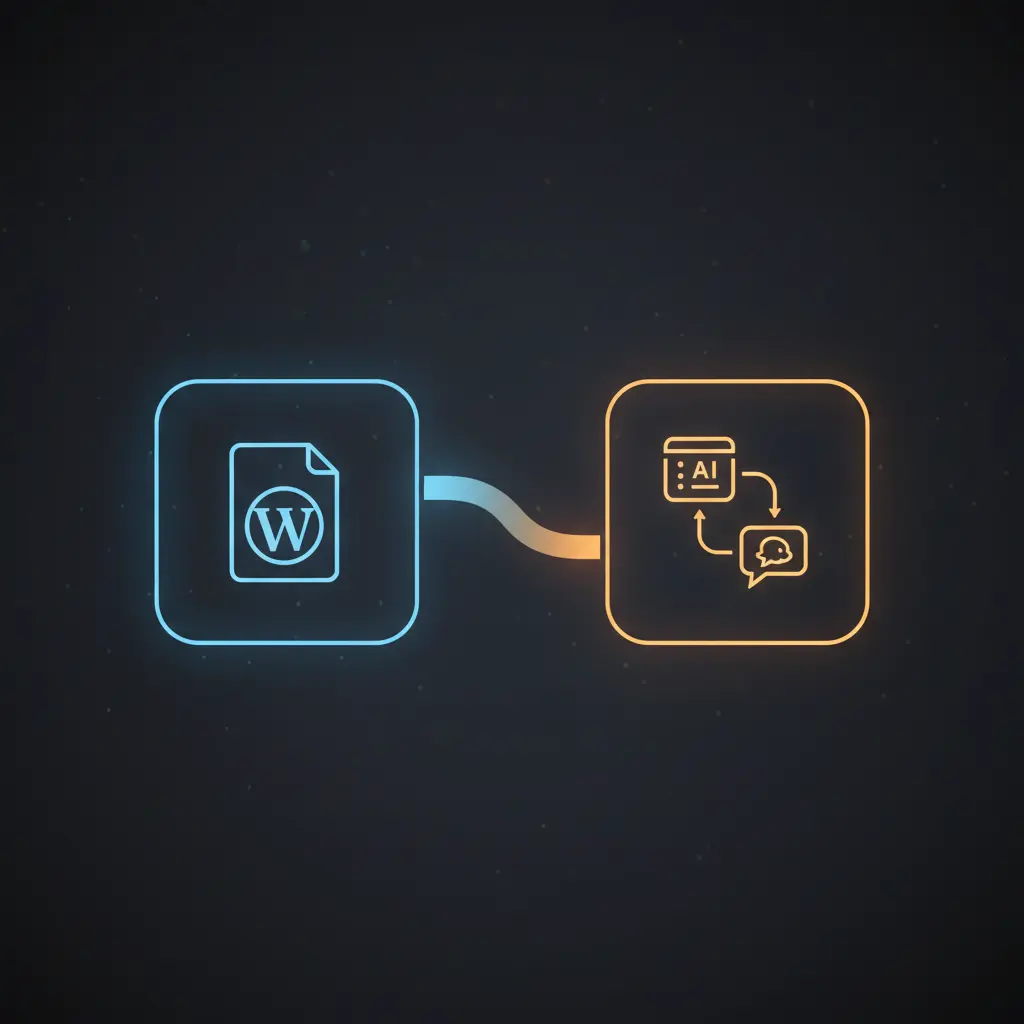
This AI-generated summary block automation workflow facilitates the extraction and insertion of concise summaries into WordPress posts, using a no-code integration pipeline. Designed for content managers and developers, it addresses the challenge of manually creating summaries by reliably generating and updating posts with AI-driven content insights triggered via manual, scheduled, or webhook events.
The workflow initiates from a manual trigger node but supports event-driven analysis through schedule or webhook triggers, ensuring flexible operation based on publishing activity.
Key Benefits
- Automates AI summary generation and insertion for WordPress posts without manual editing.
- Implements robust filtering via Google Sheets and text classification to prevent duplicate summaries.
- Supports multiple trigger modes, including manual, scheduled, and webhook-based orchestration pipelines.
- Integrates Slack notifications to alert teams when posts are updated with new summaries.
Product Overview
This automation workflow begins with a manual trigger but can be configured for scheduled or webhook triggers to detect new WordPress posts. Upon activation, it retrieves the relevant post content in edit mode, converts the HTML content to Markdown for structured AI processing, and uses a LangChain text classifier node to verify if an AI summary is already present.
If no summary exists, the workflow sends the Markdown content to OpenAI’s GPT-4o-mini model with a system prompt specifically designed to generate a formatted HTML summary block. This summary is then prepended to the post content via a WordPress REST API update, preserving any manually set excerpt to maintain content integrity.
Post-processing includes logging the summarized post details to a Google Sheets document and sending formatted notifications to a Slack channel. The workflow handles multiple posts sequentially via a batching node, ensuring precise and efficient throughput. Error handling defaults to platform standards, with retry enabled on the OpenAI node.
Features and Outcomes
Core Automation
This image-to-insight orchestration pipeline processes individual WordPress posts by first validating the presence of an AI summary through a text classifier node. Posts classified as lacking summaries proceed to AI generation, ensuring single-pass evaluation and avoiding redundant processing.
- Single-pass evaluation prevents duplicate summaries via Google Sheets and classification checks.
- Sequential processing through batching enables controlled handling of multiple posts.
- Synchronous update of posts maintains content consistency and excerpt preservation.
Integrations and Intake
The workflow integrates with WordPress for post retrieval and updates using API credentials configured for secure access. It connects to Google Sheets via service account authentication to verify and log processed posts and uses Slack OAuth2 for team notifications on content updates.
- WordPress API nodes retrieve posts in edit context for accurate content handling.
- Google Sheets integration enables idempotent checks and logging of summarized posts.
- Slack integration provides event-driven notifications for real-time monitoring.
Outputs and Consumption
The workflow outputs an HTML-formatted summary block directly appended to WordPress post content. It operates synchronously with the WordPress REST API to ensure immediate content update. Logged data fields include post ID, summary content, post and edit links, and timestamp, which are stored in Google Sheets for audit and tracking.
- HTML summary block formatted for WordPress Gutenberg compatibility.
- Post updates occur synchronously via REST API ensuring content consistency.
- Structured logging in Google Sheets supports auditability and deduplication.
Workflow — End-to-End Execution
Step 1: Trigger
The workflow can be initiated manually using the “When clicking ‘Test workflow’” manual trigger node or automatically via a schedule trigger that polls for new WordPress posts at defined intervals. Alternatively, a webhook trigger can be enabled to start the workflow immediately upon post publication events, providing event-driven analysis capabilities.
Step 2: Processing
Fetched posts are processed individually using a split-in-batches node. The workflow queries Google Sheets to confirm if a post already has an AI summary recorded. Posts without summaries proceed, while those with existing entries are skipped. Post content is retrieved in edit mode and converted from HTML to Markdown to normalize formatting for AI consumption.
Step 3: Analysis
A LangChain text classifier node evaluates the Markdown content to classify posts as either summarized or not. Posts classified as “not_summarized” are sent to the OpenAI GPT-4o-mini model with a system prompt to generate a concise, bullet-point HTML summary block. This ensures precise text analysis and classification before summary generation.
Step 4: Delivery
The generated HTML summary is prepended to the post content through a WordPress REST API POST request, which also updates the post excerpt if no manual excerpt exists. After updating, the post details and summary metadata are appended to Google Sheets, and a Slack message is dispatched to notify relevant parties of the update.
Use Cases
Scenario 1
Content teams managing high-volume WordPress blogs require consistent, clear summaries for new posts. This automation workflow solves the problem by generating AI-powered summaries automatically, ensuring every post includes a concise overview without manual effort, thus improving content accessibility and reader engagement.
Scenario 2
Editorial managers need to track which posts have been summarized to avoid duplication. The orchestration pipeline integrates with Google Sheets to log processed posts, providing a reliable audit trail and preventing redundant AI summary generation, which streamlines editorial workflows and reduces operational overhead.
Scenario 3
Development teams require event-driven analysis to update content immediately after publication. Using webhook triggers, this no-code integration workflow responds in near real-time to new post events, generating and inserting AI summaries promptly, thus maintaining content freshness and improving user experience on dynamic sites.
Comparison — Manual Process vs. Automation Workflow
| Attribute | Manual/Alternative | This Workflow |
|---|---|---|
| Steps required | Multiple manual steps: reading, summarizing, posting updates. | Automated single-pass processing with conditional branching. |
| Consistency | Variable summaries prone to human error and omission. | Deterministic AI-generated summaries with classification validation. |
| Scalability | Limited scalability due to manual effort and time constraints. | Scalable batch processing and event-driven triggers handle volume. |
| Maintenance | High maintenance to track summarized posts and update content. | Low maintenance with automated logging and integration monitoring. |
Technical Specifications
| Environment | n8n automation platform |
|---|---|
| Tools / APIs | WordPress REST API, OpenAI GPT-4o-mini, Google Sheets API, Slack API |
| Execution Model | Synchronous API calls with batch processing support |
| Input Formats | WordPress post JSON content, Markdown format for AI processing |
| Output Formats | HTML summary block for WordPress posts, structured log entries in Google Sheets |
| Data Handling | Ephemeral processing; no persistent data storage except logging in Google Sheets |
| Known Constraints | Relies on external API availability for OpenAI and WordPress endpoints |
| Credentials | OpenAI API key, WordPress API credentials, Google Service Account, Slack OAuth2 |
Implementation Requirements
- Valid WordPress API credentials with permissions to read and update posts.
- OpenAI API key configured for GPT-4o-mini model usage.
- Google Sheets service account with access to the specified spreadsheet for logging.
Configuration & Validation
- Configure trigger nodes: enable manual, scheduled, or webhook trigger as appropriate.
- Verify Google Sheets integration by ensuring the sheet contains correct schema and access rights.
- Test OpenAI node with sample post content to confirm summary generation and output format.
Data Provenance
- Trigger nodes: “When clicking ‘Test workflow’”, “Schedule Trigger”, and “Webhook”.
- Text classification performed by LangChain textClassifier node to detect existing summaries.
- OpenAI GPT-4o-mini node generates the AI summary block in HTML format.
FAQ
How is the AI-generated summary block automation workflow triggered?
The workflow supports three trigger modes: manual trigger via the “Test workflow” node, scheduled trigger that polls WordPress posts at intervals, and webhook trigger for near real-time event-driven analysis when new posts are published.
Which tools or models does the orchestration pipeline use?
The workflow integrates OpenAI’s GPT-4o-mini model for AI summary generation, LangChain text classifier for content validation, WordPress API for post retrieval and updates, Google Sheets API for logging, and Slack API for notifications.
What does the response look like for client consumption?
The workflow outputs an HTML-formatted summary block compatible with WordPress Gutenberg, which is prepended to the post content. It also updates the post excerpt if applicable, maintaining the original manual excerpt when present.
Is any data persisted by the workflow?
Data is transiently processed during execution; however, summarized post metadata is logged in a Google Sheets document for audit and deduplication purposes. No other persistent storage is used.
How are errors handled in this integration flow?
The OpenAI node is configured to retry on failure to maintain continuity. Other nodes rely on n8n platform default error handling and execution order, with conditional branching to skip already summarized posts.
Conclusion
This AI-generated summary block automation workflow delivers a dependable method to enhance WordPress posts with concise, AI-driven content summaries. By integrating WordPress, OpenAI, Google Sheets, and Slack within a no-code integration pipeline, it ensures efficient content enrichment while preventing duplicate processing through layered checks. The workflow’s reliance on external APIs such as OpenAI and WordPress introduces operational dependencies that should be considered when implementing. Overall, it provides a structured, scalable approach to automated content summarization in editorial environments.












Reviews
There are no reviews yet.