Description
Overview
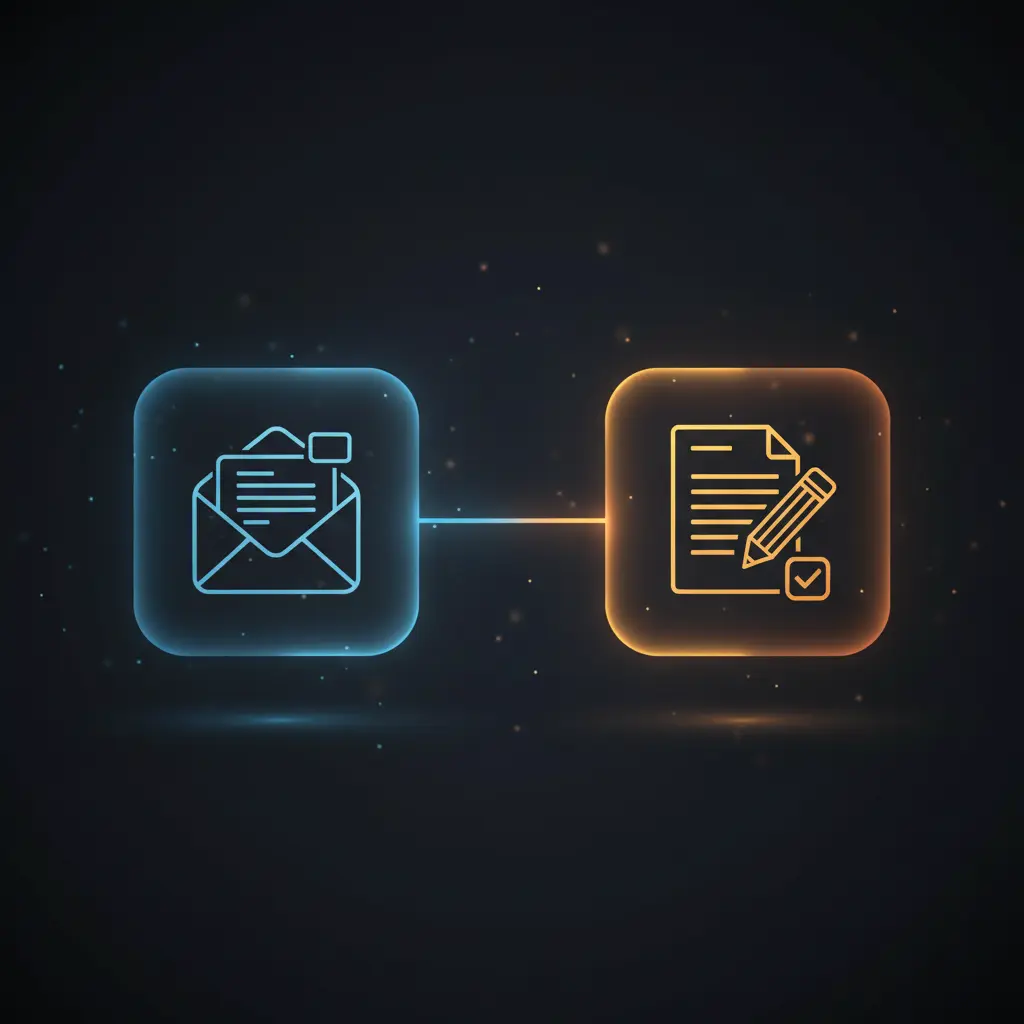
This AI-assisted reply draft generation workflow automates email response creation by leveraging a scheduled orchestration pipeline. Designed for professionals managing Gmail inboxes with specific labels, it extracts the latest message content and generates context-aware drafts using an OpenAI Assistant. The workflow initiates with a schedule trigger node configured to run every minute, ensuring timely processing of relevant email threads.
Key Benefits
- Automates reply draft creation by integrating AI-generated responses into Gmail threads efficiently.
- Utilizes a schedule-based automation workflow to check for labeled email threads every minute.
- Converts AI replies from Markdown to HTML to maintain rich email formatting and compatibility.
- Ensures message encoding compliance by converting raw emails to Base64 before Gmail API submission.
- Removes trigger labels post-processing to prevent duplicate handling of the same email threads.
Product Overview
This automation workflow is structured to run on a scheduled interval, specifically every minute, to query Gmail threads tagged with designated trigger labels. Upon activation, the workflow retrieves all relevant threads and processes each individually by extracting all messages within the thread. It isolates the most recent message for generating a reply draft. The message content, including sender details and subject, is sent to an OpenAI Assistant, which returns a draft reply in Markdown format. Subsequent nodes convert this Markdown into HTML, construct a raw email message compliant with RFC 2822 standards, and encode it into Base64, as required by the Gmail API for draft creation. The encoded message is then inserted as a draft reply into the existing Gmail thread. Finally, the workflow removes the AI trigger label from the thread to mark completion and prevent reprocessing. Error handling relies on n8n platform defaults, with no explicit retry or backoff configured. Authentication for Gmail API uses OAuth2 credentials, ensuring secure access without persistent data storage within the workflow.
Features and Outcomes
Core Automation
The automation workflow ingests Gmail threads with specific labels and uses the OpenAI Assistant to generate reply drafts. It applies deterministic processing by selecting only the latest message in each thread for AI response generation.
- Single-pass evaluation of each thread to produce one reply draft per cycle.
- Strict extraction of latest message content to maintain context relevance.
- Deterministic label removal to avoid duplicate draft generation on processed threads.
Integrations and Intake
This orchestration pipeline integrates with Gmail via OAuth2 authentication to retrieve threads and messages. It also connects to an OpenAI Assistant configured with a predefined assistant ID for text-based AI responses.
- Gmail API used for thread retrieval, message access, draft creation, and label management.
- OpenAI Assistant receives message text input to generate reply drafts in Markdown.
- Schedule trigger initiates the workflow every 60 seconds to ensure near real-time processing.
Outputs and Consumption
The workflow outputs AI-generated email drafts formatted in HTML and inserted as Base64-encoded raw messages into Gmail threads. Drafts are created asynchronously, allowing for manual review before sending.
- Reply drafts created in Gmail as RFC 2822-compliant, Base64-encoded raw messages.
- HTML-formatted email bodies preserve rich text formatting from AI-generated Markdown.
- Draft insertion tied to existing thread IDs to maintain conversation context.
Workflow — End-to-End Execution
Step 1: Trigger
The workflow is triggered by a schedule node configured to run every one minute. This initiates a check for Gmail threads tagged with specific trigger labels, serving as the entry point for processing new or updated email conversations.
Step 2: Processing
After retrieving threads with the trigger labels, the workflow splits the list into individual batches to process each thread separately. It fetches all messages within each thread and selects the last message for further processing. Basic presence checks ensure that necessary fields such as thread ID, sender, and subject are available before proceeding.
Step 3: Analysis
The selected last message’s text content is sent to the OpenAI Assistant node, which generates a reply draft in Markdown format. The assistant uses a predefined assistant ID and OpenAI API credentials for secure, authenticated requests. The workflow then converts this Markdown response into HTML for email compatibility.
Step 4: Delivery
The HTML-formatted reply is assembled into a raw email message string with appropriate headers, then encoded to Base64. The encoded draft is submitted via the Gmail API to create a reply draft within the original thread. Upon successful draft creation, the workflow removes the initial trigger label from the thread to prevent reprocessing.
Use Cases
Scenario 1
Customer support teams managing high volumes of labeled Gmail threads can automate reply drafting by extracting the latest message and generating context-aware responses. This reduces manual drafting time and ensures consistent reply quality within one execution cycle.
Scenario 2
Sales teams monitoring inquiry threads with specific labels can leverage this workflow to draft personalized email replies using AI assistance. The pipeline automates message retrieval, AI response generation, and draft insertion, facilitating faster client communications.
Scenario 3
Individuals managing multiple email conversations can apply this orchestration pipeline to maintain prompt and relevant replies. By automating reply drafts in Gmail threads based on the latest message, users receive AI-generated suggestions ready for review and sending.
How to use
To deploy this AI-assisted reply draft generation workflow, import it into your n8n environment and configure OAuth2 credentials for Gmail and API credentials for OpenAI. Set the trigger labels to match your Gmail inbox labeling strategy. Ensure the OpenAI Assistant is properly configured with the required assistant ID. Once activated, the workflow runs on schedule every minute, processing labeled threads automatically. Results appear as draft replies in the corresponding Gmail threads, formatted in HTML and ready for user review or sending.
Comparison — Manual Process vs. Automation Workflow
| Attribute | Manual/Alternative | This Workflow |
|---|---|---|
| Steps required | Multiple manual steps: reading, composing, formatting, and sending replies. | Automated single-pass processing from email retrieval to draft insertion. |
| Consistency | Variable reply quality and formatting depending on human effort. | Deterministic AI-generated drafts with consistent Markdown-to-HTML conversion. |
| Scalability | Limited by individual capacity and manual workload. | Scales automatically with scheduled batch processing of labeled threads. |
| Maintenance | Requires ongoing manual oversight and template updates. | Maintained through n8n workflow configuration and credential management. |
Technical Specifications
| Environment | n8n automation platform with OAuth2-enabled Gmail API access |
|---|---|
| Tools / APIs | Gmail API (OAuth2), OpenAI Assistant API |
| Execution Model | Scheduled trigger with synchronous API calls per thread |
| Input Formats | Gmail thread and message JSON objects with label filtering |
| Output Formats | RFC 2822 raw email messages encoded in Base64 for draft creation |
| Data Handling | Transient processing with no persistent storage; data passed between nodes |
| Known Constraints | Relies on external Gmail and OpenAI API availability and connectivity |
| Credentials | OAuth2 for Gmail; API key or OAuth for OpenAI Assistant |
Implementation Requirements
- Configured OAuth2 credentials for Gmail API with draft and label management permissions.
- Valid OpenAI Assistant credentials linked to an active assistant ID for reply generation.
- Properly defined Gmail labels to trigger processing of relevant email threads.
Configuration & Validation
- Confirm Gmail OAuth2 credentials are authorized for thread, message, draft, and label operations.
- Verify OpenAI Assistant node is linked to the correct assistant ID and API credentials.
- Test workflow with a labeled Gmail thread to ensure reply drafts are generated and inserted properly.
Data Provenance
- Schedule Trigger (1 min) node initiates the workflow at fixed intervals.
- Gmail nodes “Get threads with specific labels,” “Get single message content,” and “Add email draft to thread” manage email data ingestion and delivery.
- OpenAI Assistant node generates AI-based replies using message text inputs, with outputs converted from Markdown to HTML before draft creation.
FAQ
How is the AI-assisted reply draft generation automation workflow triggered?
The workflow is triggered by a schedule node that runs every one minute, initiating a scan for Gmail threads labeled with predefined trigger labels.
Which tools or models does the orchestration pipeline use?
The pipeline connects to Gmail via OAuth2 for email data and to an OpenAI Assistant configured with a predefined assistant ID to generate reply drafts based on message content.
What does the response look like for client consumption?
The response is an HTML-formatted email draft inserted into the existing Gmail thread, encoded as a Base64 raw message compliant with Gmail API requirements.
Is any data persisted by the workflow?
No data is persisted within the workflow; all processing is transient, with email data passed between nodes and drafts stored only in Gmail.
How are errors handled in this integration flow?
Error handling relies on n8n platform defaults. The workflow has no explicit retry or backoff configured, so failures depend on underlying node behavior and platform settings.
Conclusion
This AI-assisted reply draft generation workflow provides a structured, repeatable method for automating email response drafting within Gmail threads. By combining scheduled label-based triggers, OpenAI-powered text generation, and Gmail API integration, it delivers consistent draft replies formatted in HTML and inserted as Base64-encoded raw messages. While the workflow depends on external API availability and connectivity, it reduces manual drafting steps and improves throughput for managing labeled email conversations. The transient data processing and OAuth2-based authentication ensure secure, compliant operations without persistent data storage.












Reviews
There are no reviews yet.