Description
Overview
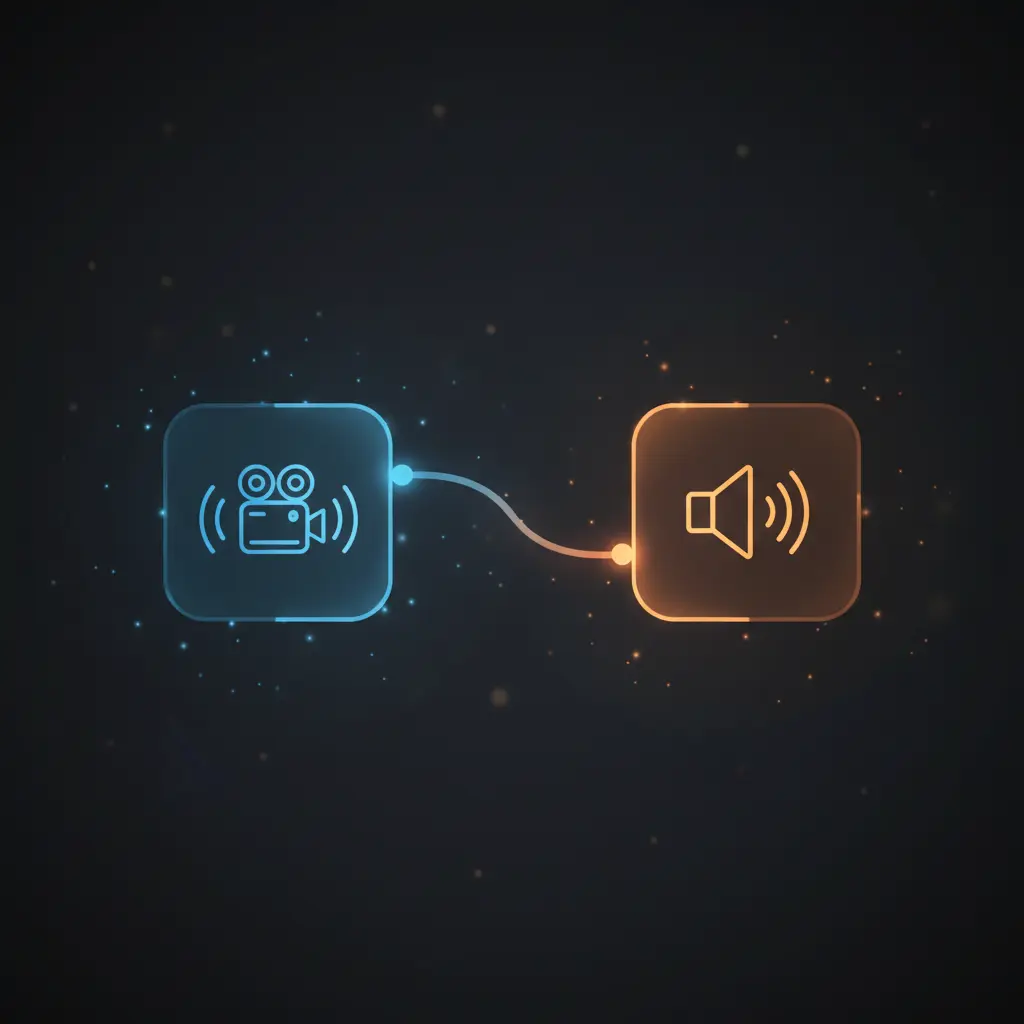
This video narration automation workflow extracts visual frames from a video file and uses a multimodal large language model to generate a corresponding voiceover script. This orchestration pipeline leverages no-code integration techniques, combining video frame extraction and AI-driven script narration to produce a synchronized audio narration clip from visual content.
Designed for technical users and developers working with video content analysis, the workflow begins with an HTTP trigger and includes a Python node that extracts up to 90 evenly distributed frames using OpenCV. The final output is a narrated audio file generated through text-to-speech conversion.
Key Benefits
- Automates frame extraction from video using OpenCV for precise image sampling.
- Generates cohesive narration scripts leveraging a multimodal LLM with image input capability.
- Processes frames in batches to comply with token limits and optimize LLM performance.
- Converts aggregated narration text into an MP3 voiceover via integrated text-to-speech.
- Uploads generated audio files directly to Google Drive for seamless storage and access.
Product Overview
This automation workflow initiates with a manual trigger node, followed by downloading a video file via an HTTP Request node. The video is input as a Base64-encoded string to a Python Code node where OpenCV extracts up to 90 evenly spaced frames, balancing performance and memory usage. Extracted frames are converted into Base64-encoded JPEG images, then split into individual items for batch processing.
Frames are grouped in batches of 15 to stay within the token limits of the multimodal LLM node, which receives binary image data inputs. The LangChain LLM node generates narration scripts in the style of David Attenborough, continuing previous partial scripts to maintain narrative coherence. A wait node enforces service rate limits, ensuring stable API usage.
After generating all script segments, an aggregation node combines the text into a single comprehensive narration. This script is sent to an OpenAI text-to-speech node configured to output MP3 audio. The resulting voiceover file is uploaded to a designated Google Drive folder using OAuth credentials. The workflow employs synchronous request-response patterns between nodes and does not persist intermediate data beyond node execution.
Features and Outcomes
Core Automation
The video narration automation workflow inputs a Base64 video stream, extracts frames, and generates narration scripts using a multimodal LLM. Frames are processed in fixed-size batches with sequential script continuation to maintain narrative flow.
- Deterministic frame extraction capped at 90 frames per video for consistent coverage.
- Single-pass evaluation per batch to generate partial narration scripts.
- Sequential aggregation of script parts to create a unified narration text.
Integrations and Intake
The orchestration pipeline integrates multiple tools including HTTP for video download, Python OpenCV for frame extraction, LangChain LLM for script generation, OpenAI for text-to-speech, and Google Drive for storage. OAuth and API key credentials authenticate external services.
- HTTP Request node downloads stock video in MP4 format.
- OpenAI API key secures access to multimodal LLM and TTS features.
- Google Drive OAuth enables secure upload of final audio files.
Outputs and Consumption
The workflow produces an MP3 audio file containing the narrated script generated from video frames. Output is asynchronously uploaded to Google Drive with timestamped filenames for organized retrieval.
- MP3 voiceover clip generated via OpenAI text-to-speech.
- Audio files stored in Google Drive folders with OAuth authentication.
- Aggregated narration text available for inspection prior to TTS conversion.
Workflow — End-to-End Execution
Step 1: Trigger
The process begins with a manual trigger node activated by user interaction. This node initiates the workflow execution without requiring incoming webhooks or scheduled events.
Step 2: Processing
The HTTP Request node downloads a video file from a fixed URL. The video content is converted to a Base64 string and passed to the Python Code node, which performs frame extraction. Basic presence checks ensure valid video data before processing.
Step 3: Analysis
Frames are split and batched in groups of 15. Each batch is resized to 768×768 pixels and aggregated before input to the LangChain multimodal LLM node. The model generates narration scripts based on image inputs, continuing prior text to maintain continuity. A wait node manages API rate limits between batches.
Step 4: Delivery
The combined script is sent to the OpenAI text-to-speech node to produce an MP3 audio clip. This audio file is then uploaded asynchronously to a designated Google Drive folder using OAuth credentials, completing the workflow.
Use Cases
Scenario 1
Content creators needing automated narration for video footage can use this workflow to convert visual data into a scripted voiceover. It eliminates manual scripting by generating narration directly from frames, resulting in a synchronized audio narrative in one automated cycle.
Scenario 2
Developers building video summarization tools can integrate this orchestration pipeline to convert key visual frames into descriptive text and audio narration. The batch processing ensures compatibility with token limits while producing continuous script output for enhanced usability.
Scenario 3
Educational platforms requiring accessible video content can apply this automation workflow to generate voiceover narrations from visual materials. The deterministic frame extraction and AI narration ensure consistent, repeatable outputs for diverse video inputs.
How to use
After importing this workflow into n8n, configure the OpenAI and Google Drive credentials with valid API keys and OAuth tokens respectively. Trigger the workflow manually to start the process. The workflow downloads the video, extracts frames, generates narration scripts, converts text to audio, and uploads the final MP3 to Google Drive.
Users should provide videos in supported formats accessible via HTTP URLs. Expect an output MP3 stored in the configured Google Drive folder, named with a timestamp. Monitor memory usage when processing large videos, as frame extraction is resource intensive.
Comparison — Manual Process vs. Automation Workflow
| Attribute | Manual/Alternative | This Workflow |
|---|---|---|
| Steps required | Multiple manual steps: frame capture, script writing, voiceover recording, upload | Single automated pipeline combining all steps sequentially |
| Consistency | Variable based on human interpretation and effort | Deterministic frame extraction and script generation ensure consistent output |
| Scalability | Limited by manual labor and time constraints | Batch processing enables handling multiple videos with minimal intervention |
| Maintenance | High, due to manual coordination and tool switching | Low, centralized in a single workflow with monitored API dependencies |
Technical Specifications
| Environment | n8n workflow automation platform |
|---|---|
| Tools / APIs | OpenAI multimodal LLM, OpenAI text-to-speech, Google Drive API, OpenCV via Python |
| Execution Model | Synchronous node chaining with batch processing and rate-limit waits |
| Input Formats | MP4 video via HTTP download (Base64-encoded internally) |
| Output Formats | MP3 audio file, Base64-encoded JPEG frames internally |
| Data Handling | Transient processing with no persistent storage outside Google Drive upload |
| Known Constraints | Memory-intensive frame extraction; max 90 frames per video to limit resource use |
| Credentials | OpenAI API key, Google Drive OAuth2 token |
Implementation Requirements
- Valid OpenAI API key with access to multimodal language models and TTS features.
- Google Drive OAuth2 credentials with upload permissions to target folder.
- Video source URL accessible over HTTP, delivering MP4 files compatible with OpenCV.
Configuration & Validation
- Import workflow and configure OpenAI and Google Drive credentials in n8n.
- Test video download node with a known MP4 URL to confirm retrieval functionality.
- Run full workflow manually; verify frames extraction, script generation, and MP3 upload completion.
Data Provenance
- Trigger node: Manual trigger initiates the workflow execution.
- Frame extraction: Python Code node using OpenCV decodes and samples video frames.
- Script generation: LangChain multimodal LLM node processes batches of resized frames.
- Audio generation: OpenAI text-to-speech node converts aggregated narration text into MP3.
- Storage: Google Drive node uploads final audio file using OAuth authentication.
FAQ
How is the video narration automation workflow triggered?
The workflow starts via a manual trigger node, requiring user initiation to begin video download and processing.
Which tools or models does the orchestration pipeline use?
The pipeline integrates OpenCV for frame extraction, a LangChain multimodal LLM for narration script generation, OpenAI text-to-speech for audio synthesis, and Google Drive API for file upload.
What does the response look like for client consumption?
The final output is an MP3 audio file containing the narrated voiceover, uploaded asynchronously to a Google Drive folder with timestamped naming.
Is any data persisted by the workflow?
Intermediate data such as frames and scripts are transient and processed in-memory; only the final MP3 audio is stored persistently in Google Drive.
How are errors handled in this integration flow?
Error handling relies on platform defaults; no explicit retry or backoff mechanisms are configured beyond n8n’s standard error handling.
Conclusion
This video narration automation workflow converts visual content into narrated audio using deterministic frame extraction and multimodal AI script generation. By batching frames and aggregating partial scripts, it ensures coherent narration synchronized with video visuals. The final voiceover is produced via text-to-speech and securely uploaded to cloud storage. Users should note that resource consumption for frame extraction is significant and constrained to 90 frames per video to maintain stability. The workflow depends on external API availability for OpenAI services and Google Drive integrations, with no persistent intermediate storage, ensuring transient and secure data handling throughout the process.














Reviews
There are no reviews yet.