Description
Overview
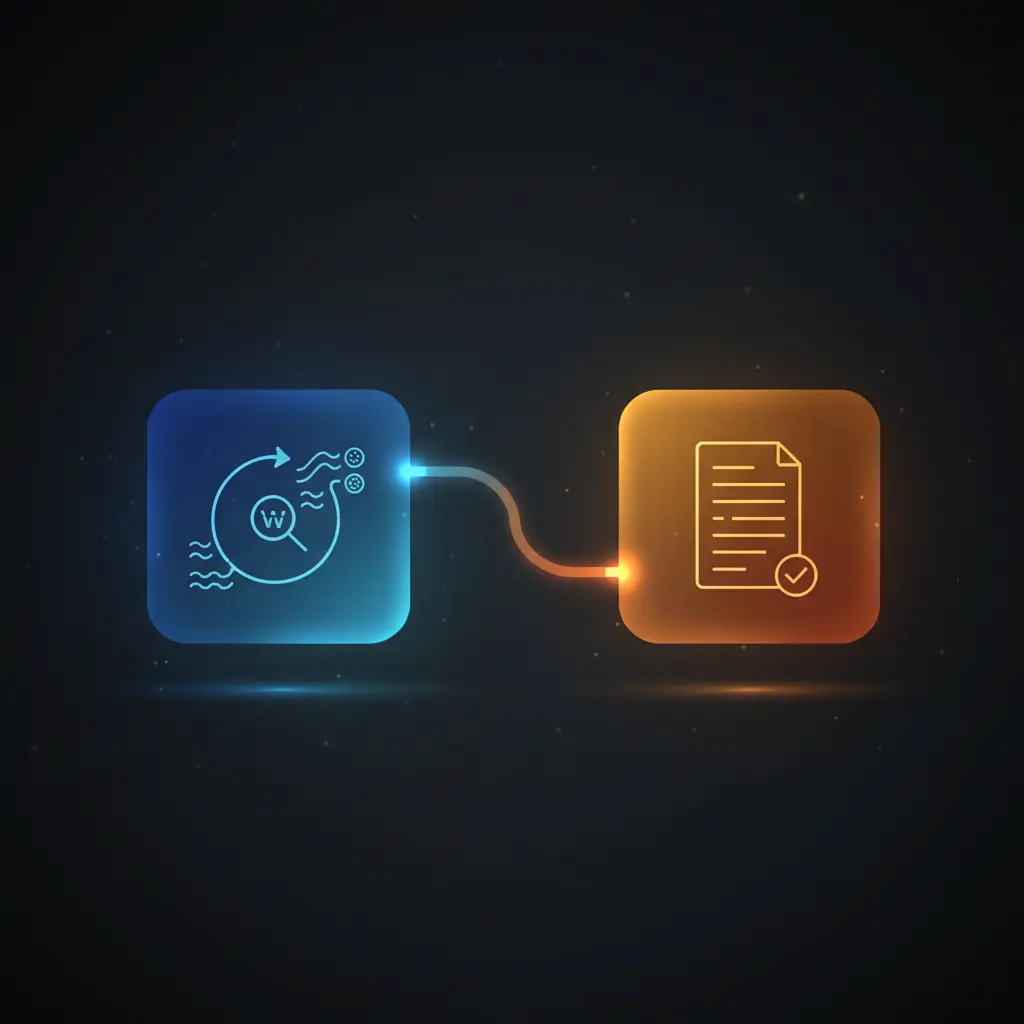
The Selenium Ultimate Scraper workflow is an advanced automation workflow designed for comprehensive web scraping and data extraction. This orchestration pipeline leverages Selenium for browser automation combined with OpenAI’s GPT models to extract relevant information visually and textually from any webpage, including those behind authentication requiring session cookies.
Intended for developers and data engineers requiring robust no-code integration for web data collection, it deterministically processes a POST webhook input containing subject, domain or target URL, optional cookies, and target data fields. The workflow initiates with a webhook trigger node to intake structured JSON requests.
Key Benefits
- Enables authenticated scraping by injecting session cookies into Selenium browser sessions.
- Automates URL discovery via domain-restricted Google search with dynamic extraction of relevant links.
- Employs anti-detection browser script injection to bypass Selenium fingerprinting mechanisms.
- Integrates image-to-insight analysis using OpenAI’s GPT model on webpage screenshots for contextual data extraction.
- Includes comprehensive error handling and session cleanup to maintain resource efficiency and reliability.
Product Overview
This no-code integration workflow begins with an HTTP POST webhook that accepts a JSON payload including a subject keyword, target domain or URL, optional cookies array, and a list of up to five data fields to extract. If no direct URL is provided, the automation workflow performs a Google search constrained to the specified domain and subject to identify URLs containing relevant content. It extracts URLs via an HTML extraction node and applies OpenAI’s language model to select the most pertinent URL.
Following URL determination, the workflow creates a Selenium Chrome session through HTTP requests to a Selenium container, resizing the browser window to 1920×1080 pixels for consistency. It executes a custom JavaScript snippet to remove typical Selenium detection artifacts, such as the navigator.webdriver property and plugin enumerations, which enhances scraping reliability against anti-bot defenses.
If cookies are supplied, they are normalized—particularly the sameSite attribute—and injected into the Selenium browser session to simulate authenticated user states. The browser then navigates to the target URL, capturing screenshots at various stages. These images are converted to base64 binary objects and sent synchronously to OpenAI’s GPT-4o model for image analysis, extracting contextual information or detecting blocking by web application firewalls.
The textual output from GPT is passed through information extractor nodes that parse and format the requested data fields into structured JSON. The workflow uses multiple HTTP request nodes to delete Selenium sessions in all completion paths, ensuring no lingering browser processes. Error responses with precise HTTP codes are returned in cases of missing URLs, blocked content, or failures, adhering to platform defaults for error handling.
Features and Outcomes
Core Automation
This automation workflow processes input specifying a subject and domain or URL, dynamically selecting the best URL via Google search and content extraction. It applies conditional branching to handle cases with or without authentication cookies and detects blocking scenarios using content heuristics.
- Deterministic URL extraction and validation using HTML content nodes and language model filtering.
- Conditional logic manages cookie injection and navigation paths based on input presence.
- Single-pass evaluation of webpage content through synchronous image analysis and text extraction.
Integrations and Intake
The workflow integrates Selenium Chrome via HTTP API for browser automation and OpenAI’s GPT-4o model for image-based content analysis. Input is received through an n8n webhook node expecting JSON with subject, domain, optional cookies, and target data fields.
- Selenium HTTP requests perform session creation, URL navigation, cookie injection, and session deletion.
- OpenAI GPT nodes perform synchronous image-to-insight analysis on webpage screenshots.
- Google Search HTTP node queries site-restricted search results for dynamic URL determination.
Outputs and Consumption
The final output is structured JSON containing extracted data fields as specified in the input. Responses are returned synchronously via webhook response nodes with appropriate HTTP status codes depending on success or error conditions.
- JSON responses include requested target data fields extracted from webpage visual and textual content.
- Error responses return JSON with descriptive messages and HTTP status codes (404, 500) as applicable.
- Session cleanup ensures no residual resources, maintaining operational stability for downstream consumers.
Workflow — End-to-End Execution
Step 1: Trigger
The process starts with an HTTP POST webhook node that receives a JSON payload specifying the subject, website domain or target URL, optional session cookies array, and target data fields. This webhook acts as the entry point for the orchestration pipeline.
Step 2: Processing
Initial processing extracts and sets key fields such as Subject and Website Domain from the input. If no target URL is provided, the workflow queries Google Search restricted to the domain and subject, extracts URLs from the HTML results, and filters them for relevance using an OpenAI language model node. Basic presence checks validate URL results before proceeding.
Step 3: Analysis
The workflow creates a Selenium Chrome session via HTTP API, resizes the browser, and injects a script to remove Selenium detection traces. If provided, cookies are normalized and injected to enable authenticated browsing. The Selenium browser navigates to the chosen URL, takes screenshots, and submits them to OpenAI GPT-4o for image analysis. The textual output is parsed for requested data fields or flagged as BLOCK if protected by WAF.
Step 4: Delivery
Extracted data is formatted into structured JSON and returned synchronously via the webhook response node. In error or block cases, appropriate JSON messages and HTTP status codes are returned. Selenium sessions are deleted to ensure no resource leakage.
Use Cases
Scenario 1
When needing to scrape data from a website requiring login, the workflow accepts session cookies via webhook input, injects them into Selenium, and navigates authenticated pages. This approach enables extraction of protected metrics, returning structured data in one response cycle.
Scenario 2
Without a direct target URL, users can provide a subject and domain. The workflow performs a Google search to identify relevant URLs, selects the most appropriate link using language model filtering, and extracts requested data fields. This automates link discovery and content scraping seamlessly.
Scenario 3
To gather complex visual information from webpages, the workflow captures screenshots and analyzes them with OpenAI’s image understanding capabilities. This event-driven analysis extracts nuanced data from dynamic or JavaScript-heavy pages where direct HTML scraping is unreliable.
How to use
After deploying the workflow in n8n, configure the Selenium Chrome container accessible via HTTP API and ensure OpenAI API credentials are set. Send a POST request to the webhook with JSON specifying the subject, domain or target URL, optional session cookies, and target data fields (up to five). The workflow runs automatically, returning extracted data or error messages. Monitor logs for session creation and deletion to verify lifecycle management. Results include structured JSON output with requested fields based on image and text analysis.
Comparison — Manual Process vs. Automation Workflow
| Attribute | Manual/Alternative | This Workflow |
|---|---|---|
| Steps required | Multiple manual steps including browser control, login, navigation, and data parsing. | Single automated pipeline from webhook input to structured JSON output. |
| Consistency | Variable due to human error and manual process variability. | Deterministic execution with error handling and Selenium session cleanup. |
| Scalability | Limited by manual effort and session management complexity. | Supports proxy configuration and automated session handling for scale. |
| Maintenance | High effort to update scripts and manage authentication changes. | Centralized workflow with configurable nodes and credential management. |
Technical Specifications
| Environment | n8n workflow running with Selenium Chrome container and OpenAI API. |
|---|---|
| Tools / APIs | Selenium WebDriver HTTP API, OpenAI GPT-4o model, Google Search HTTP API. |
| Execution Model | Synchronous request-response via webhook with conditional branching. |
| Input Formats | JSON payload via POST webhook including subject, domain/URL, cookies, and target fields. |
| Output Formats | JSON structured data with extracted fields or error messages. |
| Data Handling | Transient in-memory processing; no persistent storage of scraped data. |
| Known Constraints | Relies on external APIs availability (Google Search, OpenAI) and Selenium container uptime. |
| Credentials | OpenAI API key, Selenium HTTP endpoint access, optional proxy server configuration. |
Implementation Requirements
- Deployment of a Selenium Chrome container accessible via HTTP requests.
- Valid OpenAI API credentials configured in n8n for GPT model access.
- Network access allowing outbound HTTP to Google Search and OpenAI endpoints.
Configuration & Validation
- Verify webhook receives correctly structured JSON with required fields: subject, domain/URL, and target data.
- Confirm Selenium session creation and browser resize API calls succeed without errors.
- Validate that OpenAI image analysis nodes return expected content or block signals and that sessions are deleted on completion.
Data Provenance
- Webhook node initiates the workflow with user-provided JSON input.
- Selenium Chrome container accessed via HTTP request nodes for session management and navigation.
- OpenAI GPT-4o model invoked through language model nodes for image-based information extraction.
FAQ
How is the Selenium Ultimate Scraper automation workflow triggered?
The workflow is triggered by an HTTP POST webhook node that ingests a JSON payload containing the subject, domain or target URL, optional cookies, and the list of target data points to extract.
Which tools or models does the orchestration pipeline use?
The pipeline uses Selenium WebDriver via HTTP API to control a Chrome browser instance, and OpenAI’s GPT-4o model for image-to-insight analysis of webpage screenshots.
What does the response look like for client consumption?
Responses are synchronous JSON payloads containing the requested target data fields extracted from the webpage or error messages with appropriate HTTP status codes if extraction fails or the page is blocked.
Is any data persisted by the workflow?
No. The workflow processes all data transiently in memory and deletes Selenium sessions immediately after use, ensuring no persistent storage of scraped content.
How are errors handled in this integration flow?
The workflow uses conditional nodes to detect errors such as missing URLs or blocked pages and responds with HTTP error codes (404, 500) and JSON error messages. Selenium sessions are always deleted to prevent resource leaks.
Conclusion
The Selenium Ultimate Scraper workflow provides a deterministic, expert-level no-code integration for extracting structured data from any website, including those requiring authentication via session cookies. By combining Selenium browser automation with OpenAI’s image and text analysis, it overcomes challenges of dynamic content and anti-bot protections. The workflow ensures reliable session management with comprehensive cleanup and error handling. Its primary limitation is the dependency on external services such as OpenAI and Google Search for URL discovery and content analysis, which requires stable connectivity and valid credentials. This solution is suited for scalable, repeatable web data extraction tasks demanding precision and robust integration.










Reviews
There are no reviews yet.