Description
Overview
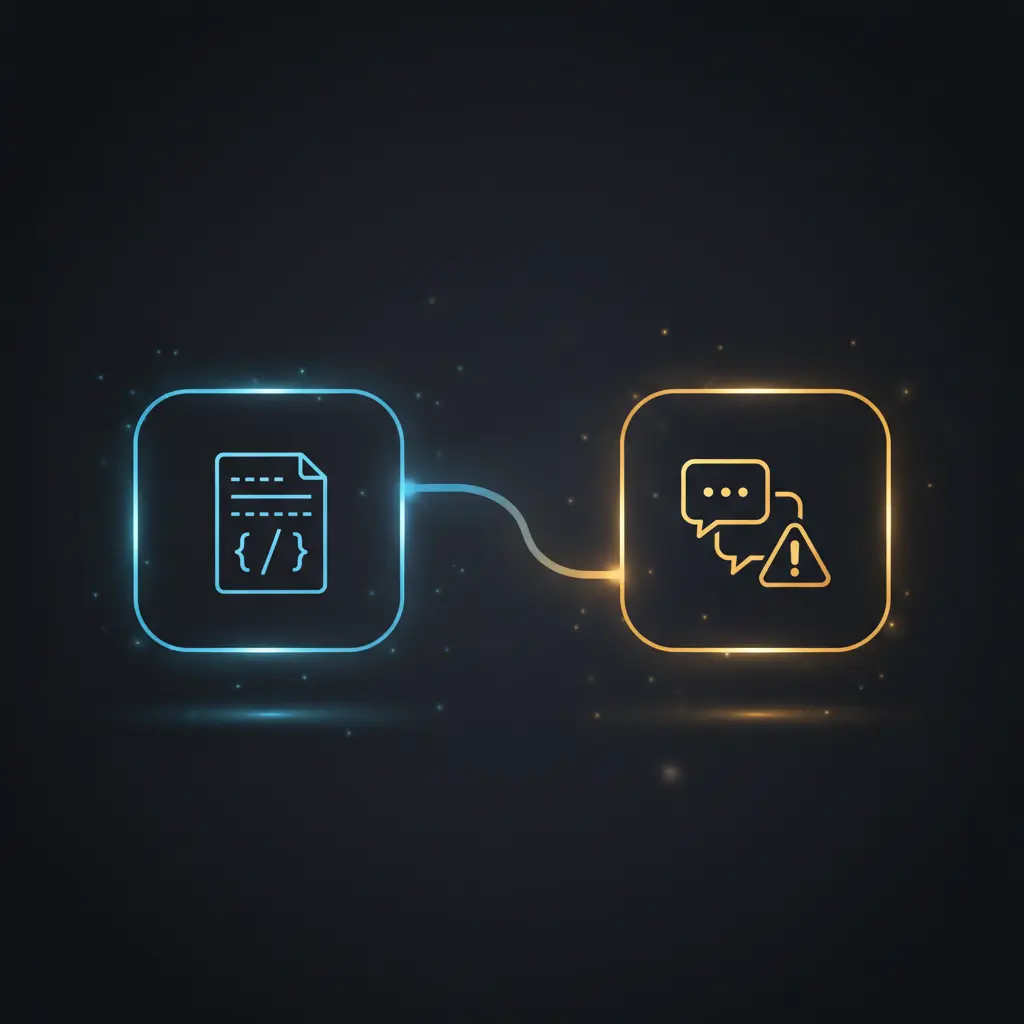
This prompt template automation workflow streamlines fetching and dynamically populating text templates stored in a GitHub repository, implementing a no-code integration for prompt management. Designed for developers and automation engineers, it addresses the challenge of maintaining up-to-date prompt content with variable placeholders, leveraging a manual trigger node to initiate the process.
The workflow begins with a manual trigger and uses a GitHub node to retrieve prompt files, ensuring controlled and repeatable prompt orchestration pipelines for AI-driven applications.
Key Benefits
- Automates prompt template retrieval from GitHub repositories via dynamic file path construction.
- Validates presence of all required placeholder variables before proceeding with replacements.
- Performs dynamic variable injection, enabling flexible prompt customization through no-code integration.
- Integrates seamlessly with AI agent nodes to deliver processed prompts for NLP tasks.
Product Overview
This automation workflow initiates via a manual trigger node, allowing users to start the process on demand. It sets static variables defining the GitHub account, repository, file path, and prompt filename, alongside business-specific parameters such as company name and product features. Using these variables, the GitHub node fetches the designated prompt template file from the repository dynamically. The text content is extracted and analyzed to detect all placeholder variables enclosed in double curly braces.
A code node verifies that all required variables are defined within the workflow’s set variables node. Conditional logic routes the process either to an error halt if variables are missing or to a variable replacement node. The replacement node systematically substitutes placeholders with their corresponding values, producing a fully populated prompt. This prompt is then sent synchronously to an AI agent node configured for text processing. The workflow outputs the AI-generated response, completing the end-to-end prompt-to-response orchestration pipeline.
Features and Outcomes
Core Automation
The workflow operates as a prompt template orchestration pipeline, accepting manual initiation. It uses variable presence validation and conditional branching to guarantee prompt integrity before AI processing.
- Single-pass evaluation of prompt placeholders ensures completeness before execution.
- Deterministic replacement of all defined variables within prompt text templates.
- Conditional error handling prevents downstream processing when variables are incomplete.
Integrations and Intake
The pipeline integrates with GitHub’s API using stored API credentials for secure file retrieval. It requires specific input variables: account, repository, path, and prompt filename to dynamically construct the file location.
- GitHub node fetches prompt templates from public or private repositories.
- Manual trigger node initiates the workflow on demand.
- Set node defines static variables for flexible prompt path and content management.
Outputs and Consumption
The workflow outputs a fully populated prompt string and the AI agent’s processed response. Outputs are synchronous within the workflow, enabling immediate consumption by downstream systems or users.
- Populated prompt text with all placeholders replaced by defined variables.
- AI-generated response string delivered in a dedicated output field.
- Error outputs generated when required variables are missing, halting further execution.
Workflow — End-to-End Execution
Step 1: Trigger
The workflow begins with a manual trigger node activated by the user clicking “Test workflow.” This initiation method allows controlled, on-demand execution without external event dependencies.
Step 2: Processing
Static variables defining GitHub repository details and prompt context are set. The GitHub node then dynamically constructs the file path and repository owner based on these variables, fetching the specified prompt template file. The raw text content is extracted from the file for further processing.
Step 3: Analysis
A code node parses the prompt text to identify all variable placeholders enclosed in {{ }}. It compares these required placeholders against the predefined variables set earlier. If all required variables are present, the workflow proceeds; otherwise, it routes to an error node. This analysis ensures the prompt can be fully populated before AI processing.
Step 4: Delivery
When validation passes, a code node replaces placeholders with their corresponding variable values. The completed prompt is forwarded to an AI agent node for processing, which returns a textual response. This response is stored in a dedicated output node for consumption. If validation fails, an error node outputs missing variable information and halts execution.
Use Cases
Scenario 1
Developers managing multiple AI prompt templates need to update and test prompts frequently. This workflow automates loading prompt templates from GitHub and populating variables dynamically, enabling consistent prompt updates. The result is a reliable and repeatable process for prompt management without manual file editing.
Scenario 2
Content teams require customized prompt generation based on variable business data. Using this no-code integration, teams can inject company, product, and feature variables into standard prompt templates, ensuring tailored AI interactions. This deterministic pipeline returns fully populated prompts ready for AI consumption in one execution cycle.
Scenario 3
Automation architects want to validate prompt completeness before AI processing to avoid runtime errors. This workflow includes a validation step that checks for missing variables and halts execution if any are absent, preventing incomplete prompt dispatch. The outcome is a robust, error-aware prompt orchestration pipeline.
How to use
To utilize this prompt template automation workflow, import it into your n8n environment and configure the GitHub API credentials. Adjust the variables in the “setVars” node to match your repository, path, and prompt filename, as well as business-specific parameters. Trigger the workflow manually via the designated manual trigger node. Upon execution, the system fetches the prompt template, validates and replaces variables, then forwards the populated prompt to the AI agent node. The resulting AI response is accessible in the final output node for integration or review.
Comparison — Manual Process vs. Automation Workflow
| Attribute | Manual/Alternative | This Workflow |
|---|---|---|
| Steps required | Manual file download, editing, validation, and AI prompt submission | Single automated execution from trigger through AI response |
| Consistency | Prone to human errors in variable replacement and missing placeholders | Automated validation and deterministic variable injection |
| Scalability | Limited by manual editing and validation throughput | Scales with workflow automation and API-driven input |
| Maintenance | Requires continuous manual updates and error checking | Centralized variable management with automated error handling |
Technical Specifications
| Environment | n8n automation platform |
|---|---|
| Tools / APIs | GitHub API (file retrieval), LangChain AI Agent, Ollama Chat Model |
| Execution Model | Manual trigger, synchronous sequential processing |
| Input Formats | JSON variables input, Markdown prompt templates |
| Output Formats | JSON with populated prompt and AI response strings |
| Data Handling | Transient processing; no persistent storage in workflow |
| Known Constraints | Relies on availability of GitHub API and AI agent services |
| Credentials | GitHub API key, Ollama API credentials |
Implementation Requirements
- Valid GitHub API credentials configured in n8n for repository access.
- Ollama API credentials or equivalent AI agent authentication for prompt processing.
- Properly formatted JSON input variables matching placeholders in prompt templates.
Configuration & Validation
- Set the required static variables in the “setVars” node, including repository and prompt file details.
- Verify that the GitHub node can successfully fetch the specified prompt file with configured credentials.
- Run the workflow and confirm the “Check All Prompt Vars Present” node returns success with no missing variables before AI processing.
Data Provenance
- Trigger node: “When clicking ‘Test workflow’” – manual initiation point.
- GitHub node: dynamically retrieves prompt template files using provided account and repo parameters.
- AI Agent node: processes the populated prompt for AI-driven outputs, linked with Ollama Chat Model credentials.
FAQ
How is the prompt template automation workflow triggered?
The workflow is triggered manually via the “When clicking ‘Test workflow’” manual trigger node, allowing controlled execution on demand.
Which tools or models does the orchestration pipeline use?
The pipeline integrates with the GitHub API to fetch prompt templates and uses an AI agent node powered by the Ollama Chat Model for processing prompts.
What does the response look like for client consumption?
The workflow outputs a JSON object containing the fully populated prompt and the AI agent’s textual response, enabling straightforward downstream integration.
Is any data persisted by the workflow?
No data is persisted by the workflow; all processing is transient and handled in-memory during execution.
How are errors handled in this integration flow?
If required prompt variables are missing, the workflow routes to a Stop and Error node that halts execution and outputs a detailed error message listing missing variables.
Conclusion
This prompt template automation workflow provides a deterministic method to retrieve, validate, and populate AI prompt templates stored in GitHub repositories. It ensures all required variables are present before forwarding populated prompts to an AI agent, reducing runtime errors and manual intervention. The workflow’s reliance on external APIs such as GitHub and AI services introduces dependencies on their availability, which must be considered in operational planning. Overall, it delivers a robust, repeatable orchestration pipeline for prompt-driven AI applications within the n8n environment.











Reviews
There are no reviews yet.