Description
Overview
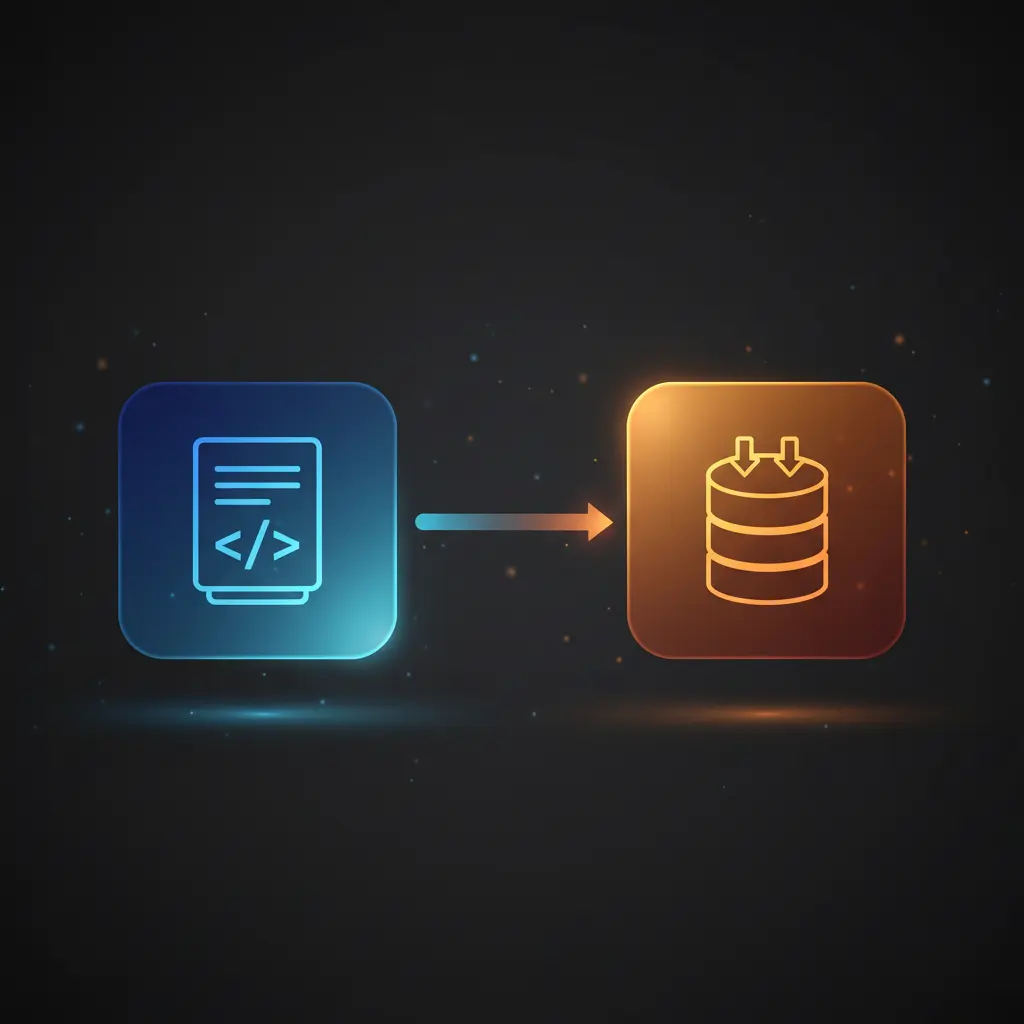
This product description details the XML to MySQL product data import automation workflow, a no-code integration designed for structured data ingestion from XML files. The workflow is manually triggered and utilizes a binary file reader node to intake an XML file containing product information, converting it into JSON format for database insertion.
Key Benefits
- Enables extraction and conversion of XML product data into database-ready JSON format.
- Implements an orchestration pipeline for batch processing multiple product records simultaneously.
- Supports manual initiation to control timing and frequency of data imports accurately.
- Maps XML attributes and elements precisely to MySQL table columns for structured storage.
Product Overview
This automation workflow begins with a manual trigger node, requiring explicit user activation. Upon execution, it reads a locally stored XML file from a predefined file path using a binary file reader node. The binary content is passed to a code node that extracts the data buffer and converts it into a UTF-8 string, producing a JSON field containing the raw XML text. The XML node then parses this string into a JSON object, preserving attributes and original tag structure without normalization or trimming. The item lists node splits the JSON array located at the “Products.Product” path into discrete product items for processing. Each product item is subsequently inserted into a MySQL database table named “new_table” via a dedicated MySQL node, which maps XML fields such as Code, Name, Line, Scale, Description, and Price to corresponding database columns. Fixed default values are assigned for vendor, stock quantity, and buy price. The database connection uses a credential configured for MySQL access. Error handling and retries rely on platform defaults, as no explicit error management is configured. No data persistence happens outside the target database insertion step, ensuring transient processing of XML data.
Features and Outcomes
Core Automation
This XML to MySQL import orchestration pipeline processes product data by reading binary XML files and converting them into JSON format. It applies deterministic parsing and extracts product entries for database insertion.
- Single-pass XML parsing without tag normalization ensures accurate attribute retention.
- Explicit field mapping from XML attributes to MySQL columns maintains data integrity.
- Batch processing of product items supports scalable data ingestion.
Integrations and Intake
The workflow integrates with local file storage to read XML files and a MySQL database for data insertion. Authentication is handled via stored MySQL credentials with no external API calls.
- Local file access node reads XML content as binary data.
- MySQL node inserts processed records into “new_table” with defined column mappings.
- Manual trigger node initiates workflow execution on demand.
Outputs and Consumption
Processed product records are inserted synchronously into a MySQL table with detailed output enabled. The workflow does not produce external file outputs but returns database insertion results internally.
- Database insertion output includes detailed success and failure metadata per record.
- Synchronous execution provides immediate confirmation of inserted records.
- Output fields correspond directly to MySQL table schema columns.
Workflow — End-to-End Execution
Step 1: Trigger
The workflow begins manually when the user clicks “Execute Workflow” within the n8n interface. This manual trigger node requires explicit user action to start the data import process.
Step 2: Processing
The binary file read node accesses a local XML file at a fixed path. The binary data is converted into a UTF-8 string by a code node, which extracts the binary buffer without transformation. The XML node parses this string into a JSON object, preserving all attributes and nested elements without normalization or trimming. Basic presence validation occurs by virtue of structured parsing; no additional schema validation is applied.
Step 3: Analysis
The item lists node splits the JSON array at the “Products.Product” path into individual product records for processing. The workflow applies deterministic mapping rules to extract fields such as Code, Name, Line, Scale, Description, and Price from each product object. No conditional branching or heuristic decision-making is involved.
Step 4: Delivery
Each product item is inserted into the MySQL database table “new_table” through a MySQL node using predefined column mappings. The insertion occurs synchronously, with detailed output enabled to provide per-record insertion metadata. Fixed values are assigned to vendor, stock quantity, and buy price fields. The workflow does not produce outputs beyond database insertion results.
Use Cases
Scenario 1
A company needs to import legacy product data stored in XML files into a modern MySQL database. This workflow automates the process by converting XML to JSON and inserting each product record into the database, ensuring consistent data structure and reducing manual entry errors.
Scenario 2
An e-commerce platform requires regular updates from supplier product catalogs provided as XML files. Using this no-code integration, product data can be manually imported when new files are available, converting and storing product attributes directly into the backend database for immediate use.
Scenario 3
Data analysts need structured access to product details originally maintained in XML format. This workflow extracts each product item into a MySQL table, providing a normalized data set that supports downstream reporting and analytics without manual data reformatting.
How to use
To utilize this XML to MySQL import automation workflow, first ensure the XML file containing product data is located at the configured local path. Import the workflow into n8n and configure the MySQL credentials with access to the target database. Manually trigger the workflow by clicking “Execute Workflow” within n8n. Upon execution, the XML file is read, parsed, and each product record is inserted into the “new_table” MySQL table. The expected output is a detailed insertion result for each record, confirming successful import or reporting any issues encountered.
Comparison — Manual Process vs. Automation Workflow
| Attribute | Manual/Alternative | This Workflow |
|---|---|---|
| Steps required | Multiple manual steps including file reading, parsing, and database entry | Single manual trigger initiates automated parsing and insertion |
| Consistency | Subject to human error in data transcription and formatting | Deterministic data mapping and structured processing reduce errors |
| Scalability | Limited by manual effort and time constraints | Processes batch product records with consistent throughput |
| Maintenance | Requires frequent manual updates and validation | Minimal maintenance; adapts to XML structure and database schema |
Technical Specifications
| Environment | n8n workflow automation platform, local file system, MySQL database |
|---|---|
| Tools / APIs | n8n nodes: manual trigger, read binary files, code, XML parser, item lists, MySQL |
| Execution Model | Manual trigger initiates synchronous workflow execution |
| Input Formats | XML file with product data at fixed local file path |
| Output Formats | MySQL table rows inserted into “new_table” with detailed insertion output |
| Data Handling | Transient XML parsing to JSON, no intermediate persistence outside database |
| Known Constraints | Requires manual trigger; local XML file must exist at specified path |
| Credentials | MySQL credential for database access configured in n8n |
Implementation Requirements
- Access to the local file system with the XML file stored at the configured path.
- Configured MySQL database with appropriate permissions to insert into “new_table”.
- n8n environment with proper MySQL credentials and workflow imported.
Configuration & Validation
- Ensure the XML file exists at /home/node/.n8n/intermediate.xml with proper product data format.
- Verify MySQL credentials are correct and the database “new_table” exists or is created as required.
- Trigger the workflow manually in n8n and confirm insertion results report success without errors.
Data Provenance
- Trigger node: manual trigger initiates workflow execution.
- Read binary files node: reads XML file from local filesystem.
- MySQL node “Add new records”: inserts parsed product data into database table “new_table”.
FAQ
How is the XML to MySQL product data import automation workflow triggered?
The workflow is initiated manually by the user clicking “Execute Workflow” within the n8n interface, enabling controlled execution.
Which tools or models does the orchestration pipeline use?
The workflow uses n8n nodes including a manual trigger, binary file reader, code execution for data extraction, XML parser, item list splitter, and MySQL node for database insertion.
What does the response look like for client consumption?
The workflow returns detailed insertion metadata for each product record inserted into the MySQL table, providing success or failure status per entry.
Is any data persisted by the workflow?
Data is transiently handled during parsing; persistence occurs only through insertion into the MySQL database table “new_table”.
How are errors handled in this integration flow?
There is no explicit error handling configured; the workflow relies on n8n’s platform default error handling and reporting mechanisms.
Conclusion
This XML to MySQL product data import automation workflow provides a deterministic, manually triggered solution for converting structured XML product files into a relational database format. It ensures accurate attribute mapping and batch insertion of product records into a MySQL table, reducing manual processing steps and improving data consistency. The workflow requires the presence of a local XML file and valid database credentials, with no built-in error recovery beyond platform defaults. This integration is suitable for controlled, on-demand product data ingestion where source XML structure is stable and database schema is predefined.

















Reviews
There are no reviews yet.