
Description
Overview
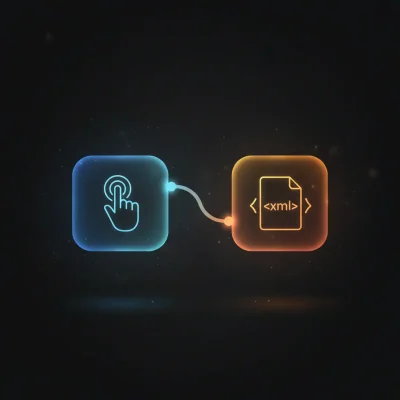
This WordPress posts retrieval automation workflow enables manual extraction of all posts from a WordPress site on demand. This orchestration pipeline uses a manual trigger node followed by a WordPress node configured to perform a “getAll” operation via the WordPress API. It is designed for users needing immediate access to complete WordPress post data sets without automated scheduling.
Key Benefits
- Provides on-demand retrieval of all WordPress posts via a manual trigger event.
- Ensures comprehensive data access, including post metadata and content fields.
- Leverages no-code integration nodes for straightforward setup and execution.
- Supports secure API authentication through configured WordPress credentials.
Product Overview
This WordPress posts retrieval automation workflow begins with a manual trigger node that requires explicit user action to initiate the process, ensuring controlled execution. Upon activation, the workflow invokes the WordPress node configured to connect securely to a WordPress site using stored API credentials labeled “wp_creds.” The WordPress node performs a “getAll” operation, retrieving the full collection of posts including their content, metadata, authorship, categories, and tags, as exposed by the WordPress REST API. The workflow operates synchronously, producing the retrieved data immediately upon trigger execution. There are no additional error handling mechanisms configured beyond the platform’s default retry behavior. This workflow does not persist data beyond runtime but facilitates immediate data extraction for further processing or export in extended pipelines. Authentication relies on pre-configured WordPress API credentials, maintaining secure access with no direct credential exposure within the workflow.
Features and Outcomes
Core Automation
The workflow’s core automation involves a manual trigger initiating a WordPress node operation to fetch all posts. This no-code integration pipeline executes a single-pass evaluation with deterministic data retrieval based on the WordPress API response.
- Single-step manual activation ensures controlled workflow start.
- Deterministic retrieval of complete WordPress post datasets per execution.
- Immediate synchronous output facilitates real-time data consumption.
Integrations and Intake
The workflow integrates directly with WordPress via the WordPress node, authenticating through API credentials stored securely within n8n. The intake is initiated by manual trigger without payload requirements, simplifying event-driven analysis of WordPress content.
- WordPress API integration retrieves post data including metadata and content.
- Manual trigger node initiates workflow without external event dependencies.
- Secure credential management via n8n’s credential store (wp_creds).
Outputs and Consumption
The output consists of structured JSON arrays representing all WordPress posts and their associated fields. The synchronous response enables immediate downstream processing or export in extended workflows.
- Outputs include post titles, content, author details, categories, and tags.
- Data delivered as JSON arrays suitable for further automation or analysis.
- Synchronous execution model returns results within the same workflow run.
Workflow — End-to-End Execution
Step 1: Trigger
The workflow begins with a manual trigger node requiring the user to click “Execute Workflow” in the n8n interface. This explicit action initiates the workflow without any input payload or automated scheduling.
Step 2: Processing
The workflow passes through unchanged data from the manual trigger node to the WordPress node. There are no intermediate parsing or validation steps configured; the WordPress node executes directly upon trigger.
Step 3: Analysis
The WordPress node performs a “getAll” operation to retrieve all posts via the WordPress REST API. This operation fetches complete post datasets without additional filtering or transformation within this workflow.
Step 4: Delivery
Upon completion, the WordPress node outputs a synchronous JSON response containing all retrieved posts and metadata. The data is available immediately for downstream consumption or export by subsequent workflow steps if added.
Use Cases
Scenario 1
For content managers needing immediate access to all WordPress posts, this manual trigger workflow allows on-demand extraction. By initiating the workflow manually, users can retrieve current post data sets without relying on scheduled automation, enabling real-time content auditing or backup.
Scenario 2
Developers integrating WordPress content with external systems can use this workflow as a controlled data intake pipeline. Triggering manually ensures integration testing with full WordPress post data before implementing continuous automation.
Scenario 3
Teams performing periodic content analysis can trigger this WordPress posts retrieval workflow to acquire the latest posts snapshot. The synchronous output provides structured JSON data for immediate processing by analytics or reporting tools.
How to use
To operate this WordPress posts retrieval automation workflow, import or create it within the n8n environment. Ensure that valid WordPress API credentials (“wp_creds”) are configured under n8n credentials for authentication. Trigger the workflow manually by clicking the “Execute Workflow” button in the n8n UI. Upon execution, the workflow will connect to the WordPress site and retrieve all posts in JSON format. Users can then view or export the output data directly or extend the workflow with additional nodes for processing or storage. The expected result is a comprehensive data set containing all WordPress posts and associated metadata available immediately after execution.
Comparison — Manual Process vs. Automation Workflow
| Attribute | Manual/Alternative | This Workflow |
|---|---|---|
| Steps required | Multiple manual steps including API calls and data aggregation. | Single manual trigger followed by automated WordPress API retrieval. |
| Consistency | Prone to human error and inconsistent data retrieval. | Consistent, deterministic retrieval of complete WordPress post data. |
| Scalability | Limited by manual effort and time constraints. | Scales with no additional effort, triggered on demand as needed. |
| Maintenance | Requires manual updates and troubleshooting per usage. | Low maintenance, leverages platform defaults and credential management. |
Technical Specifications
| Environment | n8n workflow automation platform |
|---|---|
| Tools / APIs | WordPress REST API via WordPress node |
| Execution Model | Synchronous, manual trigger initiated |
| Input Formats | Manual trigger with no payload |
| Output Formats | JSON arrays of WordPress posts and metadata |
| Data Handling | Transient in-memory processing; no data persistence |
| Known Constraints | Requires valid WordPress API credentials |
| Credentials | WordPress API credentials (“wp_creds”) stored in n8n |
Implementation Requirements
- Valid WordPress API credentials configured in n8n as “wp_creds”.
- Access to n8n interface to manually trigger workflow execution.
- Network connectivity from n8n instance to the WordPress site’s API endpoint.
Configuration & Validation
- Confirm WordPress API credentials are correctly entered and tested in n8n credential settings.
- Verify the WordPress node is set to “getAll” operation to retrieve full post data.
- Manually trigger the workflow and inspect output to ensure all WordPress posts are returned as expected.
Data Provenance
- Trigger node: Manual Trigger (“On clicking ‘execute'”) initiates workflow.
- Data source node: WordPress node configured with “getAll” operation using stored “wp_creds”.
- Output fields include posts’ content, metadata, authorship, categories, and tags as provided by WordPress API.
FAQ
How is the WordPress posts retrieval automation workflow triggered?
The workflow is triggered manually by clicking “Execute Workflow” in the n8n interface, initiating the data retrieval on demand.
Which tools or models does the orchestration pipeline use?
The workflow uses a manual trigger node followed by the WordPress node configured to connect to the WordPress REST API using stored API credentials.
What does the response look like for client consumption?
The response is a synchronous JSON array containing all WordPress posts with metadata such as titles, content, authors, categories, and tags.
Is any data persisted by the workflow?
No data is persisted by this workflow; all data is processed transiently during execution and output immediately.
How are errors handled in this integration flow?
Error handling relies on n8n platform defaults; no custom retry or backoff logic is configured in this workflow.
Conclusion
This WordPress posts retrieval automation workflow provides a manual, synchronous method to extract all posts from a WordPress site via the WordPress API. It ensures deterministic, comprehensive data access controlled by user initiation and secured through configured API credentials. While it facilitates immediate access to WordPress content, it relies on the availability and responsiveness of the external WordPress API. The workflow does not include automated scheduling or advanced error handling, focusing instead on straightforward, repeatable manual extraction with minimal maintenance overhead.


















Reviews
There are no reviews yet.