Description
Overview
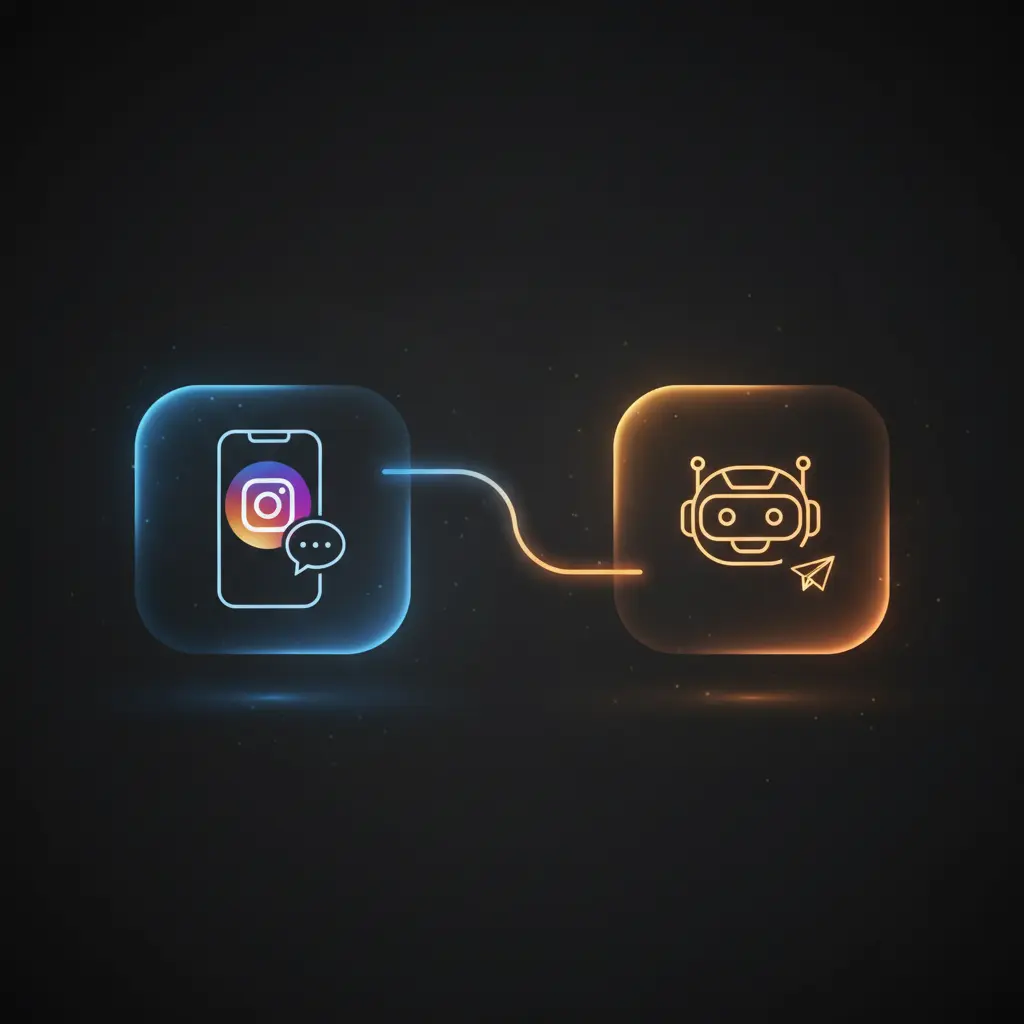
This Instagram DM automation workflow enables automated responses to subscriber messages by integrating ManyChat and OpenAI’s GPT model. Designed as an event-driven analysis pipeline, it captures incoming Instagram messages via webhook and generates context-aware replies that mimic an influencer’s writing style.
Key Benefits
- Automates Instagram DM replies using a no-code integration between ManyChat and OpenAI GPT.
- Maintains conversational context with a memory buffer for coherent multi-turn dialogue.
- Generates responses styled after an Instagram influencer persona via a system prompt.
- Processes incoming messages through a webhook trigger for real-time reply delivery.
Product Overview
This automation workflow starts with an HTTP POST webhook node configured to receive Instagram subscriber messages forwarded by ManyChat. The incoming JSON payload includes the subscriber’s message text and session ID. The workflow extracts these inputs and sets a fixed system prompt that defines the AI persona and response style as an Instagram influencer providing simple answers. The core AI Agent node acts as an orchestration pipeline, leveraging Langchain’s agent node to combine the prompt, chat input, and a local memory buffer storing the last 20 messages keyed by session ID. This memory enables contextual understanding across multi-turn conversations. The ChatGPT model node connects to OpenAI’s GPT API to generate natural language replies consistent with the influencer persona. Finally, the workflow returns the AI-generated response synchronously via the respond-to-webhook node, which ManyChat uses to send the reply back to Instagram. This workflow does not persist data beyond the transient memory buffer and relies on API key authentication for access to the language model. Error handling follows n8n’s platform defaults without specific retry or backoff configurations.
Features and Outcomes
Core Automation
This event-driven analysis pipeline processes Instagram messages received through a webhook, applying a defined system prompt to emulate an influencer’s style. The AI Agent node orchestrates input parsing and response generation using Langchain architecture integrated with memory and language model nodes.
- Single-pass evaluation combining prompt, session context, and input text for response generation.
- Contextual memory buffer maintains conversation history up to 20 messages per session.
- Synchronous input-output flow triggered by HTTP POST webhook ensures real-time replies.
Integrations and Intake
The orchestration pipeline integrates ManyChat as the external message source via an HTTP POST webhook. OpenAI’s GPT language model is accessed using API key credentials. Incoming payloads include JSON with subscriber message text and session ID, which are required for context and response generation.
- ManyChat webhook captures Instagram DM messages for processing.
- OpenAI GPT model provides natural language generation using API key authentication.
- Local n8n memory buffer stores recent conversation history keyed by session ID.
Outputs and Consumption
The workflow outputs the AI-generated reply as a synchronous HTTP response to the original webhook request. The return payload consists of plain text formatted to match the influencer’s tone and style. ManyChat consumes this output to send the response back to the Instagram subscriber.
- Plain text response returned synchronously through respond-to-webhook node.
- Response payload structured for direct consumption by ManyChat forwarding to Instagram.
- Consistent style maintained by system prompt and memory across conversation turns.
Workflow — End-to-End Execution
Step 1: Trigger
The workflow initiates upon receiving an HTTP POST request at the configured webhook. ManyChat forwards Instagram subscriber messages to this endpoint, including JSON payloads with the message text and session ID to identify conversation context.
Step 2: Processing
Payload data is extracted and assigned to variables: the subscriber’s message text and session ID. A fixed system prompt defining the AI persona and style is set. Basic presence checks ensure required fields are available before forwarding inputs to the AI Agent node.
Step 3: Analysis
The AI Agent node orchestrates processing by combining the prompt, chat input, and recent conversation history from the local memory buffer. It sends this context to the ChatGPT model node, which generates a response consistent with the influencer persona and style rules defined in the prompt.
Step 4: Delivery
The generated reply is returned synchronously via the respond-to-webhook node. This completes the request-response cycle, enabling ManyChat to forward the AI-crafted message back to the Instagram subscriber as a direct message.
Use Cases
Scenario 1
An Instagram influencer receives high volumes of direct messages requesting product recommendations. This no-code integration workflow automates responses by generating influencer-style replies in real time, maintaining conversational context to provide relevant, simple answers without manual intervention.
Scenario 2
A brand managing Instagram customer inquiries needs consistent, scalable engagement. By leveraging this automation workflow, messages are received via ManyChat webhook, analyzed with AI persona-driven prompts, and replied to synchronously, ensuring uniform and timely responses across conversations.
Scenario 3
A social media manager wants to maintain an active Instagram inbox without constant monitoring. This event-driven analysis orchestration pipeline integrates ManyChat and OpenAI GPT to deliver context-aware replies that reflect the brand’s voice, supporting multi-turn dialogues with memory-based context retention.
Comparison — Manual Process vs. Automation Workflow
| Attribute | Manual/Alternative | This Workflow |
|---|---|---|
| Steps required | Multiple manual message reviews and personalized replies. | Single automated pass from webhook receipt to AI-generated response. |
| Consistency | Variable tone and delayed responses depending on workload. | Deterministic influencer-style replies with maintained context. |
| Scalability | Limited by human capacity to read and reply. | Scales automatically with message volume using no-code integration. |
| Maintenance | Requires ongoing manual effort and style training. | Requires prompt tuning and API credential management only. |
Technical Specifications
| Environment | n8n workflow automation platform |
|---|---|
| Tools / APIs | ManyChat webhook, OpenAI GPT model, Langchain agent, local memory buffer |
| Execution Model | Synchronous HTTP POST webhook trigger with synchronous response |
| Input Formats | JSON payload with message text and session ID |
| Output Formats | Plain text response returned in webhook HTTP response |
| Data Handling | Transient conversation memory buffer; no persistent storage |
| Credentials | OpenAI API key |
Implementation Requirements
- ManyChat configured to forward Instagram DM messages to the workflow’s webhook endpoint.
- Valid OpenAI API key credentials for GPT model access.
- n8n environment with Langchain agent and memory buffer nodes enabled.
Configuration & Validation
- Ensure ManyChat webhook is correctly set to send POST requests with message text and session ID.
- Verify system prompt in “Set your system promt for AI” node matches desired influencer persona and style.
- Test the workflow by sending sample Instagram DM messages and confirm synchronous AI-generated replies are received via ManyChat.
Data Provenance
- Trigger node “Getting message from Instagram” receives webhook HTTP POST with JSON payload.
- “Set your system promt for AI” node assigns system prompt, chat input, and session ID variables.
- AI Agent node integrates prompt, input, and memory buffer to generate responses using ChatGPT model node.
FAQ
How is the Instagram DM automation workflow triggered?
It is triggered by an HTTP POST webhook that receives Instagram subscriber messages forwarded from ManyChat.
Which tools or models does the orchestration pipeline use?
The pipeline uses ManyChat for message intake, Langchain AI Agent with a local memory buffer, and OpenAI’s GPT language model accessed via API key.
What does the response look like for client consumption?
The output is plain text generated by GPT, returned synchronously as the webhook response for ManyChat to forward to Instagram.
Is any data persisted by the workflow?
No persistent data storage is used; conversation context is held transiently in a local memory buffer limited to recent 20 messages per session.
How are errors handled in this integration flow?
Error handling relies on the n8n platform defaults; no explicit retry, backoff, or idempotency mechanisms are configured.
Conclusion
This Instagram DM automation workflow delivers deterministic influencer-style replies by integrating ManyChat with OpenAI’s GPT via a no-code orchestration pipeline. It uses a webhook trigger, a fixed system prompt, and a local memory buffer to maintain conversational context for multi-turn dialogues. The synchronous request-response model supports real-time engagement without persistent data storage. Implementation depends on external API availability and correct webhook configuration. This solution provides a technically sound, scalable method for automating Instagram message responses with consistent style and contextual awareness.














Reviews
There are no reviews yet.