Description
Overview
This automation workflow facilitates an event-driven analysis of GitLab merge request code changes by generating AI-driven review comments. Designed for development teams seeking to streamline code reviews, it triggers on specific merge request events via a webhook, enabling no-code integration of AI-powered evaluation.
Key Benefits
- Automatically detects and processes merge request changes for consistent review commentary.
- Implements an orchestration pipeline to separate and analyze original versus new code segments.
- Integrates OpenAI’s language model to produce expert-level code change assessments.
- Posts inline review comments directly to GitLab merge request discussions with precise positioning.
Product Overview
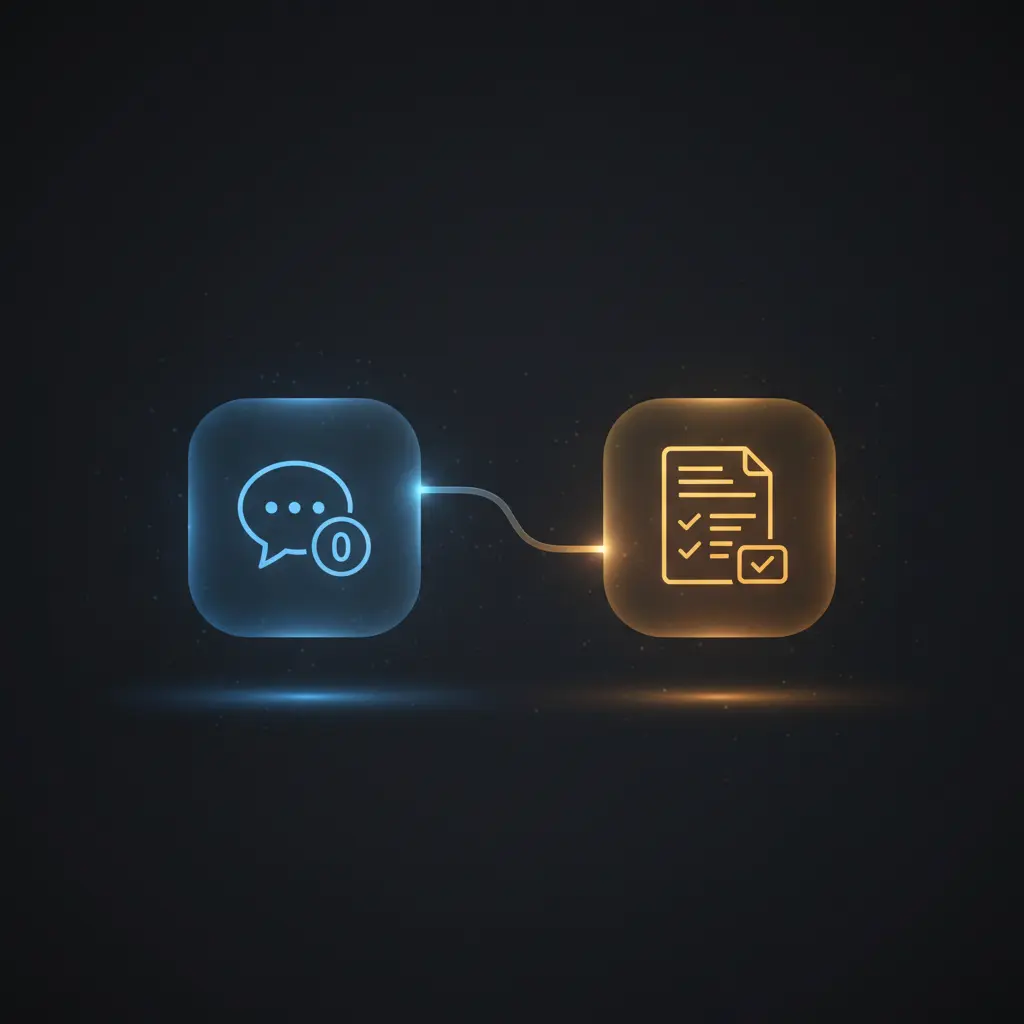
This automation workflow initiates with a webhook listening for GitLab merge request events, specifically triggered by a comment containing the exact phrase “+0”. Upon activation, it fetches the merge request changes using GitLab’s API, obtaining detailed diffs per file. The workflow then splits these diffs into individual file changes, filtering out renamed or deleted files and ensuring only valid diffs are processed. It parses the diff content to isolate the last modified line positions and separates original and new code segments for granular analysis.
Using a no-code integration node connected to OpenAI’s chat model, the workflow submits a prompt containing the file path and segmented code blocks. The AI generates a structured, expert-level code review including accept/reject decisions and a change score. Finally, the workflow posts the AI-generated comment back to the merge request as an inline discussion, accurately positioned using commit SHA references and line numbers. Error handling and retries follow platform defaults, with all sensitive credentials managed securely via environment variables.
Features and Outcomes
Core Automation
The event-driven analysis orchestrates the intake of merge request diffs, applying filtering criteria to exclude irrelevant files. It deterministically parses diff headers to identify line ranges and splits code into original and new versions before invoking AI review generation.
- Single-pass evaluation of diff content for efficient code segmentation.
- Deterministic filtering excludes renamed or deleted files from processing.
- Line number calculation ensures precise inline comment placement.
Integrations and Intake
This orchestration pipeline leverages GitLab’s REST API authenticated by a private token to retrieve merge request changes. It accepts JSON event payloads via webhook POST requests containing project and merge request identifiers.
- GitLab API for fetching merge request diffs and posting discussions.
- Webhook node configured for HTTP POST with JSON payload from GitLab MR events.
- Private token credential secures API access for all requests.
Outputs and Consumption
The workflow outputs AI-generated code review comments formatted in Markdown and posts them as inline discussions directly on GitLab merge requests. Comments are delivered asynchronously to the merge request discussion thread with contextual positioning.
- Review comments include accept/reject decisions and change scores.
- Comments posted as multipart-form-data via GitLab API.
- Precise comment placement with commit SHAs and line numbers.
Workflow — End-to-End Execution
Step 1: Trigger
The workflow activates on receiving a GitLab merge request event via an HTTP POST webhook. It specifically filters for comments equal to “+0” to initiate automated review processing.
Step 2: Processing
After triggering, the system fetches detailed diff data for the merge request using GitLab’s API. It splits the changes by file and filters out renamed or deleted files and diffs lacking standard hunk headers for relevance.
Step 3: Analysis
The workflow parses each file diff to extract original and new code blocks by identifying line prefixes. It calculates the last changed lines for accurate comment placement and sends these segments to an OpenAI chat model prompt for review generation.
Step 4: Delivery
Generated AI review comments are posted back to the merge request as inline discussions via GitLab’s API. The comments include detailed recommendations, acceptance decisions, and change scores, positioned according to calculated line references.
Use Cases
Scenario 1
Development teams need fast, consistent code reviews to maintain quality. This automation workflow triggers on a specific comment in GitLab MRs, generating expert AI feedback that is posted inline. The deterministic outcome is reduced manual review effort with structured recommendations returned in a single execution cycle.
Scenario 2
Open source maintainers want to automate initial code review comments for pull requests. By integrating this no-code integration workflow, they receive automated accept or reject decisions with reasoned explanations, improving review throughput without additional manual steps.
Scenario 3
QA teams require traceable inline feedback on code changes for compliance. This orchestration pipeline posts AI-generated review comments directly on merge requests, ensuring all feedback is version-controlled and linked precisely to code diffs for auditability.
How to use
To implement this automation workflow, import it into your n8n environment and configure the GitLab webhook URL and private token credentials. Customize the AI prompt as needed in the designated sticky note node. Activate the workflow to listen for merge request events. When a comment with “+0” is posted, the workflow initiates automatically and posts AI review comments inline on the merge request. Expect structured accept/reject evaluations with detailed feedback formatted in Markdown.
Comparison — Manual Process vs. Automation Workflow
| Attribute | Manual/Alternative | This Workflow |
|---|---|---|
| Steps required | Multiple manual reviews and comment postings per merge request. | Single-trigger automated AI review with inline posting. |
| Consistency | Varies by reviewer expertise and workload. | Deterministic AI-generated assessment with uniform criteria. |
| Scalability | Limited by available human reviewers and response time. | Scales automatically with merge request volume without added latency. |
| Maintenance | Requires ongoing reviewer training and process enforcement. | Low maintenance; prompt and API credentials updates only. |
Technical Specifications
| Environment | n8n workflow automation platform |
|---|---|
| Tools / APIs | GitLab REST API, OpenAI Chat Model API |
| Execution Model | Event-driven asynchronous with webhook trigger |
| Input Formats | JSON payload via HTTP POST webhook |
| Output Formats | Markdown-formatted review comments posted via GitLab API |
| Data Handling | Transient processing; no data persistence beyond API calls |
| Known Constraints | Relies on GitLab API availability and valid private token authentication |
| Credentials | GitLab private token for API access |
Implementation Requirements
- Access to n8n platform with ability to import and run workflows.
- GitLab webhook configured to send merge request events to the workflow’s HTTP POST endpoint.
- Valid GitLab private token with permissions to read merge requests and post discussions.
Configuration & Validation
- Set up GitLab webhook to POST merge request events to the workflow’s webhook URL.
- Configure the private token credential in the HTTP Request nodes for authentication.
- Test by posting the trigger comment “+0” on a merge request and verify AI review comments appear inline.
Data Provenance
- Trigger node: Webhook (HTTP POST from GitLab MR events).
- API interaction nodes: Get Changes1 and Post Discussions1 using GitLab private token credentials.
- AI generation node: Basic LLM Chain1 invoking OpenAI chat model for code review text.
FAQ
How is the automated code review automation workflow triggered?
The workflow triggers on a GitLab merge request event received via webhook, specifically when a comment equals “+0”.
Which tools or models does the orchestration pipeline use?
The pipeline uses GitLab’s REST API to fetch merge request changes and OpenAI’s chat model to generate expert code review comments.
What does the response look like for client consumption?
The response is a Markdown-formatted review comment including an accept/reject decision, a change score, and detailed feedback, posted inline on the merge request.
Is any data persisted by the workflow?
No data is persisted persistently; all processing is transient and data is passed between nodes in-memory only.
How are errors handled in this integration flow?
Error handling relies on n8n platform defaults; no explicit retry or backoff logic is configured in the workflow.
Conclusion
This automation workflow provides a structured, event-driven analysis of GitLab merge request code changes by integrating AI-generated expert review comments. It delivers deterministic accept/reject decisions and detailed feedback inline on merge requests, reducing manual reviewer workload. The workflow’s operation depends on GitLab API availability and valid authentication via private token. It offers a maintainable, scalable solution for automating code reviews, emphasizing precise positioning and consistent, no-code integration of AI insights.











Reviews
There are no reviews yet.