Description
Overview
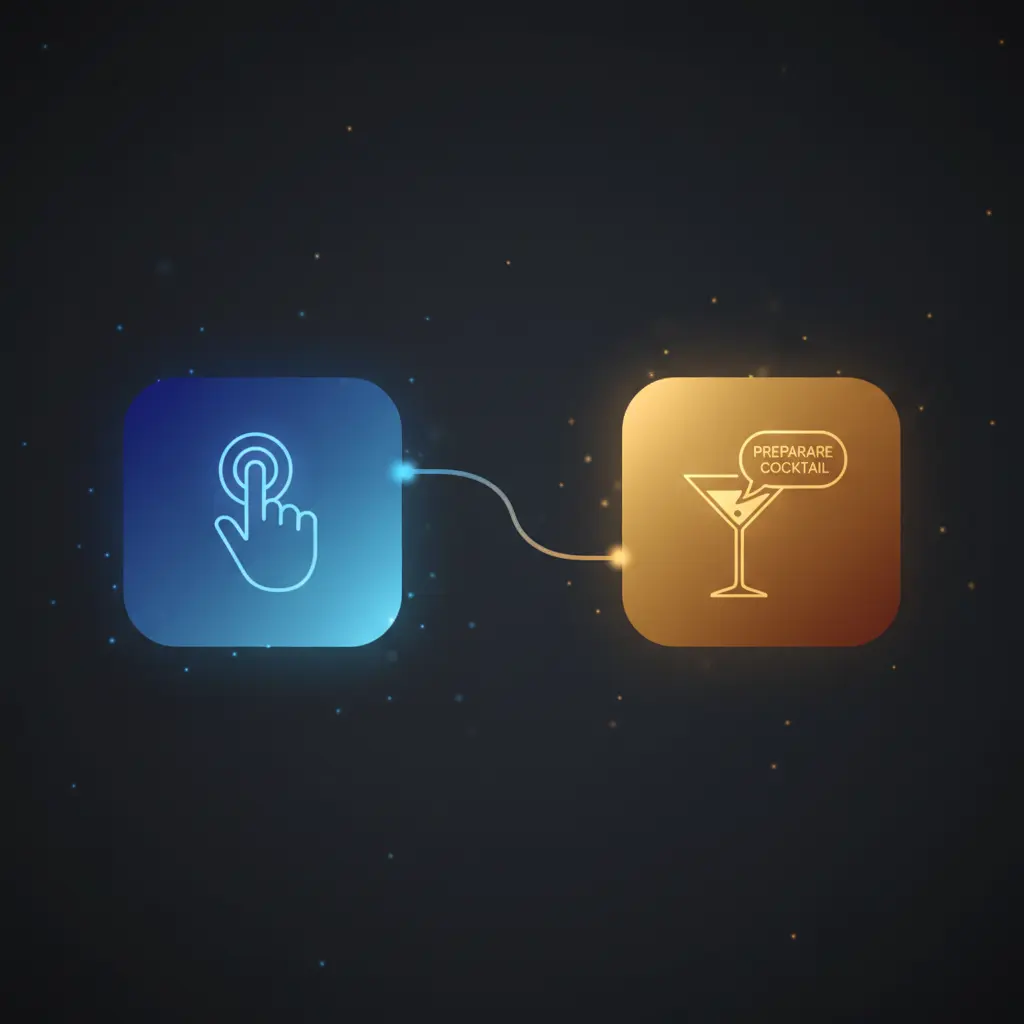
This translation automation workflow streamlines the process of fetching cocktail preparation instructions and converting them into Italian. Utilizing a manual trigger and an HTTP request node, it initiates an event-driven analysis that retrieves a random cocktail recipe, then applies no-code integration to translate the instructions accurately.
Designed for bartenders, recipe developers, and language learners, this orchestration pipeline leverages a manual trigger node to start the workflow and an HTTP Request node to obtain the source data from a verified API endpoint.
Key Benefits
- Automates retrieval and translation of cocktail instructions via a seamless integration pipeline.
- Ensures consistent and accurate translations using a dedicated language translation API node.
- Supports on-demand operation triggered manually for controlled execution flow.
- Extracts precise preparation steps by parsing JSON responses from a standardized cocktail recipe API.
Product Overview
This automation workflow begins with a manual trigger node that requires user initiation to start the sequence. Upon activation, the HTTP Request node sends a GET request to a reliable cocktail database API, retrieving a random cocktail recipe in JSON format. The response includes detailed drink attributes, including preparation instructions located within the “strInstructions” field of the first element in the “drinks” array.
The workflow then passes the extracted preparation instructions to a translation node configured to convert English text into Italian. This LingvaNex node operates with authenticated API credentials, ensuring secure and authorized access. The translation occurs synchronously within the workflow, producing an Italian rendition of the cocktail instructions as the final output.
Error handling defaults to the platform’s native retry and failure management without custom overrides. All data processing is transient; no persistent storage of recipe or translation data occurs within the workflow itself, maintaining data integrity and privacy compliance.
Features and Outcomes
Core Automation
The workflow ingests a manual trigger event to initiate an automation workflow that fetches and translates cocktail instructions. It deterministically extracts the instruction text from the nested JSON payload and applies a language translation node to convert the text to Italian.
- Single-pass evaluation of cocktail recipe retrieval and translation.
- Deterministic extraction of preparation instructions from API JSON response.
- Manual trigger enables controlled and repeatable operation cycles.
Integrations and Intake
This orchestration pipeline integrates an HTTP API from a cocktail recipe database and a LingvaNex translation service, authenticated via API key credential. The HTTP Request node expects a JSON response with a “drinks” array containing the cocktail data.
- HTTP Request node connects to a public cocktail recipe API for data intake.
- LingvaNex node uses API key authentication for translation services.
- Input payload requires field “drinks[0].strInstructions” for translation.
Outputs and Consumption
The workflow outputs the translated cocktail preparation instructions as a plain text string in Italian. The response is synchronous, delivered immediately after translation node execution. Key output fields correspond to the translated text generated by the LingvaNex node.
- Output format: translated plain text string of cocktail instructions.
- Response delivered synchronously upon workflow completion.
- Output keyed to the LingvaNex node’s translated text field.
Workflow — End-to-End Execution
Step 1: Trigger
The workflow starts with a manual trigger node activated by user interaction. This node requires no input parameters and serves as the explicit initiation point for the entire automation sequence.
Step 2: Processing
Upon trigger, the HTTP Request node issues a GET request to a specified cocktail recipe API endpoint. It passes through the response unchanged, relying on the external API to deliver valid JSON data structured with a “drinks” array containing cocktail details.
Step 3: Analysis
The LingvaNex node extracts the “strInstructions” field from the first drink object within the JSON response. It then performs a language translation from English to Italian based on this extracted text, using configured API credentials to authorize the request.
Step 4: Delivery
The translated cocktail preparation instructions are output synchronously as plain text. This final result is available immediately upon the completion of the translation node, ready for consumption by downstream processes or display.
Use Cases
Scenario 1
A bartender needs cocktail preparation instructions in Italian for an international clientele. This workflow fetches a random cocktail recipe and translates the instructions instantly, enabling accurate and consistent communication without manual translation effort.
Scenario 2
A recipe application requires multilingual support for cocktail instructions. By integrating this orchestration pipeline, the app dynamically retrieves English recipes and delivers Italian translations in one automated response cycle, enhancing user experience.
Scenario 3
Language learners studying Italian want practical examples of cocktail preparation. This workflow provides translated instructions on demand, supplying authentic content for language practice with deterministic, real-time translation output.
How to use
To implement this translation automation workflow, import it into an n8n instance with active internet connectivity. Configure the LingvaNex credentials with a valid API key for translation access. Trigger the workflow manually via the execute button to initiate a cocktail recipe fetch and translation cycle. Upon execution, observe the translated preparation instructions returned immediately as output. This setup requires no additional configuration beyond API credentialing and ensures repeatable, on-demand translations.
Comparison — Manual Process vs. Automation Workflow
| Attribute | Manual/Alternative | This Workflow |
|---|---|---|
| Steps required | Multiple manual steps including API calls and manual translation. | Single manual trigger initiates full automated retrieval and translation. |
| Consistency | Subject to human error in translation and data extraction. | Deterministic parsing and API-driven translation ensure uniform output. |
| Scalability | Limited by human capacity and time constraints. | Scales with API limits and workflow execution capacity without added manual effort. |
| Maintenance | Requires ongoing manual updates and quality checks. | Minimal maintenance aside from credential renewal and occasional node updates. |
Technical Specifications
| Environment | n8n workflow automation platform |
|---|---|
| Tools / APIs | HTTP Request node (TheCocktailDB API), LingvaNex translation node |
| Execution Model | Manual trigger initiates synchronous workflow execution |
| Input Formats | JSON response from HTTP GET request |
| Output Formats | Plain text string of translated cocktail instructions |
| Data Handling | Transient processing; no data persistence within workflow |
| Known Constraints | Relies on availability of external APIs and valid LingvaNex credentials |
| Credentials | LingvaNex API key required for translation node |
Implementation Requirements
- Access to n8n automation platform with manual execution capability.
- Valid LingvaNex API credentials configured within the workflow.
- Internet access to reach TheCocktailDB API and LingvaNex translation service.
Configuration & Validation
- Verify manual trigger node is correctly configured to start workflow execution.
- Confirm HTTP Request node URL points to the cocktail recipe API endpoint.
- Ensure LingvaNex node includes valid API credentials and target language set to Italian (it_IT).
Data Provenance
- Workflow triggered by “On clicking ‘execute'” manual trigger node.
- Recipe data retrieved via “HTTP Request” node from TheCocktailDB API.
- Instructions translated by “LingvaNex” node using LingvaNex API credentials.
FAQ
How is the translation automation workflow triggered?
The workflow is initiated manually via a manual trigger node, requiring user interaction to start the sequence.
Which tools or models does the orchestration pipeline use?
The workflow integrates an HTTP Request node to fetch cocktail data and a LingvaNex node for language translation, authenticated via API key.
What does the response look like for client consumption?
The output is a plain text string containing the cocktail preparation instructions translated into Italian, delivered synchronously.
Is any data persisted by the workflow?
No. Data is processed transiently within the workflow without any persistent storage or logging.
How are errors handled in this integration flow?
Error management relies on n8n platform default retry mechanisms; no custom error handling is configured.
Conclusion
This translation automation workflow provides a deterministic method to fetch random cocktail recipes and translate their preparation instructions into Italian on demand. It simplifies multilingual content generation by integrating data retrieval and translation into one automated pipeline. While it depends on external API availability and valid LingvaNex credentials, the workflow ensures consistent, repeatable outcomes without manual intervention beyond initial triggering. Its transient data processing model avoids persistence, maintaining data privacy and integrity throughout execution.















Reviews
There are no reviews yet.