Description
Overview
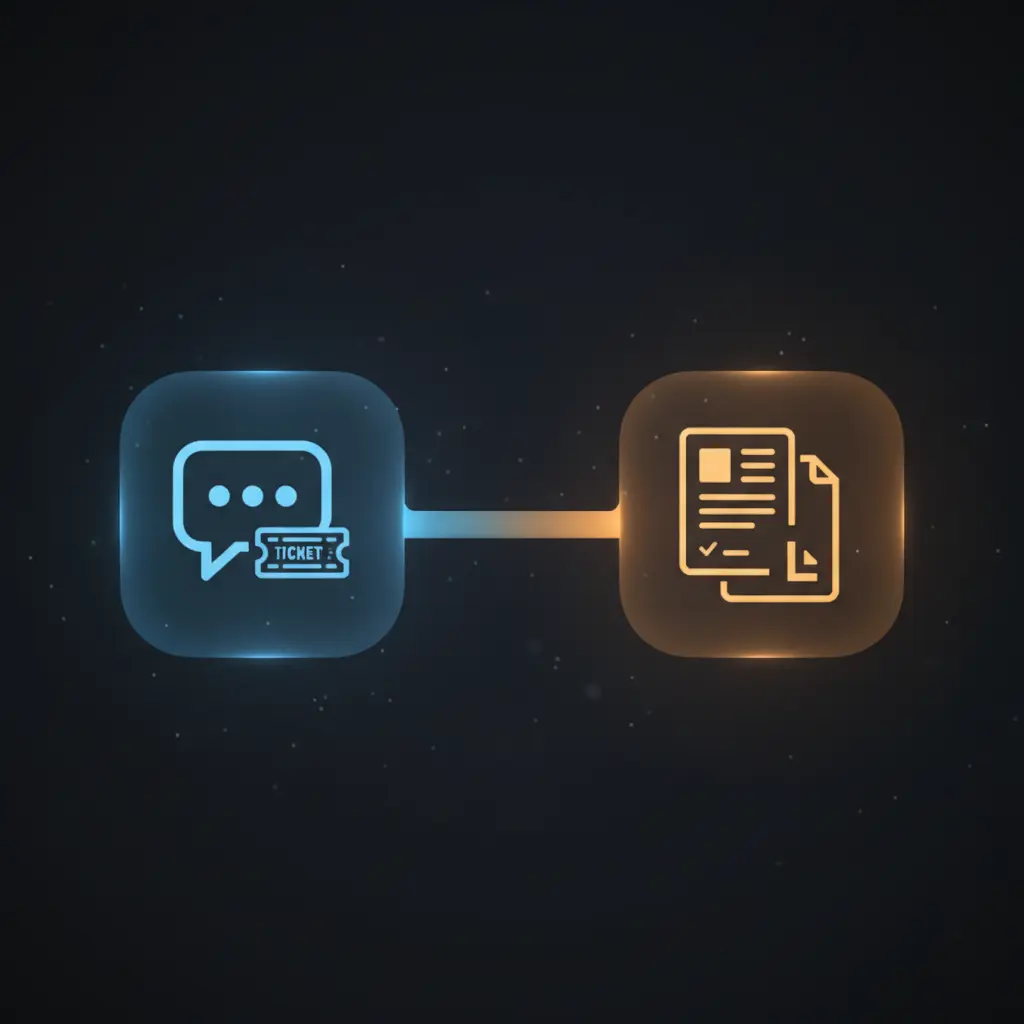
This automated ticket creation workflow leverages AI-enhanced no-code integration to streamline customer support issue management. It continuously monitors a designated Slack channel for messages tagged with a ticket emoji and generates structured support tickets in Linear, ensuring reliable and actionable issue tracking.
Key Benefits
- Automates ticket creation from Slack messages filtered by emoji tags in a no-code integration.
- Prevents duplicate tickets by cross-referencing existing Linear issues using unique message hashes.
- Generates descriptive ticket titles, summaries, and priorities using AI-enhanced automation workflow.
- Consolidates user issue details, metadata, and AI suggestions into Linear tickets for clear issue tracking.
Product Overview
This workflow operates on a scheduled trigger, activating every minute to query Slack via its API for the last 10 messages in the specified channel containing the ticket emoji. Extracted message details include unique identifiers derived from permalinks, message content, user information, and timestamps. It then retrieves all existing Linear issues to identify tickets already created, using aggregated descriptions to extract embedded message hashes. The workflow compares these hashes to Slack message IDs to avoid duplication. For new messages, AI-driven processing via OpenAI’s chat model generates structured ticket content, including titles, summaries, priority levels, and troubleshooting suggestions, parsed into JSON format. Finally, new tickets are created in Linear with mapped priorities and comprehensive descriptions combining AI output and original Slack metadata. Error handling relies on default platform behavior without explicit retries or backoff. Credentials for Slack and Linear API access are required for secure integration and transient data handling, with no persistent storage beyond Linear’s issue database.
Features and Outcomes
Core Automation
This AI-enhanced automation workflow ingests Slack messages tagged for support, applies deterministic checks for existing tickets, and branches only for new issues requiring creation.
- Processes Slack messages in single-pass evaluation to determine ticket necessity.
- Performs exact matching of message hashes against existing ticket references.
- Executes synchronous generation of structured ticket content via AI prompt and parser nodes.
Integrations and Intake
Integrates Slack’s search API and Linear’s issue tracking API using OAuth or API key credentials. Slack messages are filtered by emoji tag within a specified channel.
- Slack node queries messages with ticket emoji in configured channel for intake.
- Linear node retrieves all issues to cross-reference existing tickets for deduplication.
- OpenAI Chat Model node performs AI processing using secured API credentials.
Outputs and Consumption
The workflow outputs are newly created tickets in Linear, containing AI-generated titles, summaries, priorities, and metadata. Operations occur asynchronously within the scheduled cycle.
- Tickets created include mapped priority IDs and descriptive fields from AI output.
- Slack message metadata embedded for traceability and audit within ticket descriptions.
- Structured JSON output parsed from AI responses ensures consistent content formatting.
Workflow — End-to-End Execution
Step 1: Trigger
The workflow initiates via a Schedule Trigger node that activates every minute, ensuring near real-time processing of Slack messages.
Step 2: Processing
Slack Search Node queries the specified Slack channel for the latest 10 messages tagged with the ticket emoji. Extracted messages undergo basic presence checks and are formatted to include unique message IDs and relevant metadata for downstream processing.
Step 3: Analysis
Existing tickets are retrieved from Linear and aggregated to extract embedded message hashes. The workflow conditionally branches using an If Node to verify if the current Slack message ID exists among these hashes. If absent, AI processing generates structured ticket content including title, summary, suggestions, and priority based on the message context.
Step 4: Delivery
Upon receiving AI-generated content parsed into JSON, a new Linear ticket is created with mapped priority and detailed description, including original message metadata. This is performed asynchronously as part of the workflow execution cycle.
Use Cases
Scenario 1
A support team receives frequent user requests via Slack but struggles to track them systematically. This automation workflow monitors tagged messages and creates structured tickets in Linear, ensuring all support requests are logged with priority and actionable detail.
Scenario 2
Duplicate ticket creation causes confusion and wasted effort. By extracting unique message hashes from existing tickets and comparing them to incoming Slack messages, the workflow prevents redundant ticket generation, maintaining a clean issue backlog.
Scenario 3
Support agents require clear, concise issue descriptions and priority levels to triage effectively. The integration of AI-generated summaries, titles, and priority assignments produces consistent, actionable ticket content, improving resolution workflows.
How to use
To implement this workflow, integrate your Slack workspace and Linear account by providing the necessary API credentials within n8n. Configure the Slack Search node for the target channel and ensure the schedule trigger is enabled to run every minute. The workflow automatically queries Slack, checks existing Linear tickets, and generates new tickets with AI-enhanced content. Monitor execution logs to verify processing and review created tickets for accuracy and priority assignment. Adjust channel or team settings as needed to tailor ticket intake and assignment.
Comparison — Manual Process vs. Automation Workflow
| Attribute | Manual/Alternative | This Workflow |
|---|---|---|
| Steps required | Multiple manual reviews and data entry steps for each support request. | Automated single-pass evaluation combining Slack query, AI processing, and ticket creation. |
| Consistency | Variable quality and priority assignment depending on agent interpretation. | Consistent ticket titles, summaries, and priorities generated via AI-defined criteria. |
| Scalability | Limited by manual throughput; prone to backlog under high volume. | Scales automatically with scheduled triggers and API-driven data retrieval. |
| Maintenance | Requires ongoing human oversight and manual error correction. | Minimal maintenance beyond credential updates and channel/team configuration. |
Technical Specifications
| Environment | n8n workflow automation platform |
|---|---|
| Tools / APIs | Slack API, Linear API, OpenAI Chat API |
| Execution Model | Scheduled trigger with asynchronous API calls |
| Input Formats | Slack messages filtered by emoji tag |
| Output Formats | Structured JSON for AI output; Linear ticket fields |
| Data Handling | Transient processing; no persistent storage outside Linear |
| Known Constraints | Depends on availability of Slack and Linear APIs |
| Credentials | API keys or OAuth tokens for Slack, Linear, and OpenAI |
Implementation Requirements
- Valid Slack API credentials with permission to search messages in the target channel.
- Linear API credentials with access to create and read issues in the designated team.
- OpenAI API credentials for AI content generation within the workflow.
Configuration & Validation
- Confirm Slack channel configuration matches the intended support request channel with correct emoji filter.
- Verify Linear team ID and state/priority mappings align with your issue tracking setup.
- Test scheduled executions and monitor tickets created for accuracy in title, summary, and priority.
Data Provenance
- Schedule Trigger node initiates the workflow every minute.
- Slack node queries messages with ticket emoji in the configured channel.
- AI processing performed by OpenAI Chat Model and Structured Output Parser nodes.
- Tickets created via Linear node using AI-generated structured JSON output fields.
FAQ
How is the automated ticket creation workflow triggered?
The workflow is triggered on a schedule, executing every minute to query Slack for new messages tagged with the ticket emoji in a specified channel.
Which tools or models does the orchestration pipeline use?
The orchestration pipeline integrates Slack API for message intake, OpenAI Chat Model for AI-generated ticket content, and Linear API for issue creation and retrieval.
What does the response look like for client consumption?
New tickets in Linear contain AI-generated titles, summaries, priorities, and original Slack message metadata embedded in the description field.
Is any data persisted by the workflow?
The workflow processes data transiently; only tickets created in Linear persist information beyond the workflow execution.
How are errors handled in this integration flow?
The workflow uses the platform’s default error handling without explicit retry or backoff mechanisms configured.
Conclusion
This automated ticket creation workflow provides a structured, AI-enhanced method to convert Slack user messages tagged for support into actionable tickets in Linear. By combining scheduled monitoring, duplicate detection through message hash comparison, and AI-generated content, it ensures consistent and prioritized issue tracking. The workflow relies on continuous availability of Slack, Linear, and OpenAI APIs to operate effectively. It reduces manual steps and improves support ticket quality without persistent data storage outside Linear, supporting efficient and maintainable customer support operations.












Reviews
There are no reviews yet.