
Description
Overview
This automation workflow enables manual execution of SQL queries on a Microsoft SQL Server database, providing an on-demand database interaction pipeline. Designed for database administrators and developers, it addresses the need for controlled, user-initiated data operations via a manual trigger node.
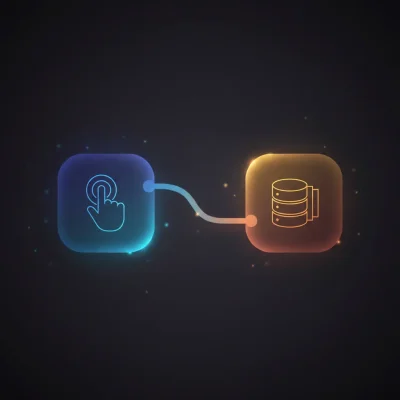
The workflow initiates with a manual trigger node and proceeds to execute a configured SQL query using the Microsoft SQL node, facilitating direct database command execution without automation scheduling.
Key Benefits
- Enables precise manual control over database interactions with a manual trigger activation.
- Supports execution of any valid SQL command, allowing flexible data retrieval or manipulation.
- Leverages built-in Microsoft SQL integration for seamless connectivity to SQL Server databases.
- Provides a straightforward orchestration pipeline requiring minimal configuration for execution.
Product Overview
This manual trigger to Microsoft SQL query execution workflow facilitates user-initiated database commands in an event-driven analysis environment. The workflow begins with a manual trigger node that requires explicit user action—clicking “Execute”—to start the process. Upon activation, it proceeds to the Microsoft SQL node configured to run an SQL query against a connected Microsoft SQL Server database using stored credentials.
The Microsoft SQL node operates in executeQuery mode, enabling the running of arbitrary SQL commands. However, without a pre-defined query, the workflow will return no results or an error depending on the node’s handling of empty queries. This setup allows schema-specific or ad hoc queries to be inserted dynamically prior to execution.
No inherent error handling or retry logic is configured, relying on the platform’s default error propagation mechanisms. Authentication is managed via secure Microsoft SQL credentials, with no data persistence within the workflow itself, ensuring transient processing of query results only during execution.
Features and Outcomes
Core Automation
This manual SQL execution orchestration pipeline accepts a trigger from user interaction and deterministically initiates a database query. The Microsoft SQL node processes the query synchronously once triggered, enabling deterministic execution of commands without automatic scheduling.
- Single-pass evaluation initiated only on manual trigger activation.
- Deterministic execution flow with no branching or conditional logic.
- Immediate transition from trigger to query execution without intermediate processing.
Integrations and Intake
This workflow integrates directly with Microsoft SQL Server via the Microsoft SQL node using configured credentials. Intake occurs exclusively through a manual trigger, requiring no external event or webhook. The payload is implicitly the SQL query string defined within the node’s parameters.
- Microsoft SQL Server integration for executing SQL queries.
- Manual trigger node initiates workflow execution.
- Requires valid SQL query string configured prior to execution.
Outputs and Consumption
The workflow outputs the Microsoft SQL node’s query result as a JSON object containing the returned dataset or error details synchronously. The output format aligns with the Microsoft SQL node’s native response structure, suitable for downstream consumption or logging.
- JSON-formatted query results returned synchronously after execution.
- Includes dataset rows or error messages based on query success.
- Compatible with further processing or integration within n8n.
Workflow — End-to-End Execution
Step 1: Trigger
The workflow begins with a manual trigger node requiring a user to click “Execute” within the n8n interface. This manual initiation ensures no automatic or scheduled starts, providing explicit control over when the SQL query runs.
Step 2: Processing
Upon activation, the workflow passes control to the Microsoft SQL node. There are no intermediate parsing or validation steps; the query parameter is taken as-is. If the query field is empty, the node may return an error or no output depending on the node’s internal handling.
Step 3: Analysis
The workflow relies on the Microsoft SQL node to perform query execution against the connected database. No additional logic, heuristics, or thresholds are applied within the workflow; the node executes the provided SQL statement directly.
Step 4: Delivery
Results from the SQL query execute synchronously and are returned as JSON output from the Microsoft SQL node. This output is available immediately after execution for consumption within n8n or external integration points.
Use Cases
Scenario 1
Database administrators need to run ad hoc queries without scheduling or automation. This workflow allows manual initiation of SQL commands, providing immediate query execution and result retrieval on demand.
Scenario 2
Developers require a simple integration pipeline to test SQL queries within n8n’s environment. By manually triggering the workflow, they can validate SQL syntax and output without building complex automation.
Scenario 3
Operations teams want to perform database updates or deletions manually through a controlled interface. This manual trigger workflow facilitates direct SQL command execution with explicit user control and no automated timing.
How to use
To use this workflow, import it into your n8n instance and configure the Microsoft SQL node with valid database credentials. Insert the desired SQL query into the query parameter before execution. Trigger the workflow manually by clicking the “Execute” button in the n8n UI. Upon execution, observe the query results returned synchronously for further processing or verification.
Comparison — Manual Process vs. Automation Workflow
| Attribute | Manual/Alternative | This Workflow |
|---|---|---|
| Steps required | Multiple manual steps including connecting and running queries via database tools. | Single-step manual trigger initiates query execution directly within n8n. |
| Consistency | Dependent on manual input; prone to human error or inconsistent timing. | Deterministic execution flow triggered only by explicit user action. |
| Scalability | Limited by manual intervention and individual client tools. | Scales with n8n environment; multiple workflows can be triggered independently. |
| Maintenance | Requires manual oversight of queries and client setups. | Centralized maintenance of credentials and queries within n8n nodes. |
Technical Specifications
| Environment | n8n automation platform supporting manual triggers and Microsoft SQL nodes |
|---|---|
| Tools / APIs | Microsoft SQL Server via Microsoft SQL node |
| Execution Model | Manual trigger initiates synchronous SQL query execution |
| Input Formats | SQL query string configured in node parameters |
| Output Formats | JSON-formatted query results or error messages |
| Data Handling | Transient processing; no data persistence within workflow |
| Credentials | Microsoft SQL Server credentials required for authentication |
Implementation Requirements
- Valid Microsoft SQL Server credentials configured within the Microsoft SQL node.
- Access permissions allowing the execution of the specified SQL queries.
- User access to the n8n interface to manually trigger the workflow.
Configuration & Validation
- Configure Microsoft SQL node with appropriate database credentials and connection parameters.
- Insert the desired SQL query into the node’s query parameter before execution.
- Manually trigger the workflow and verify the returned JSON output for correctness.
Data Provenance
- Trigger node: Manual Trigger (n8n-nodes-base.manualTrigger) initiates on user action.
- Execution node: Microsoft SQL (n8n-nodes-base.microsoftSql) executes SQL queries.
- Credentials: Microsoft SQL Server credentials securely referenced within node configuration.
FAQ
How is the manual SQL query execution automation workflow triggered?
The workflow triggers exclusively via a manual trigger node requiring the user to initiate execution by clicking “Execute” in the n8n interface.
Which tools or models does the orchestration pipeline use?
The pipeline uses the Microsoft SQL node to connect and execute queries on Microsoft SQL Server databases using stored credentials.
What does the response look like for client consumption?
The response is a JSON object containing the query result set or error information, returned synchronously after execution.
Is any data persisted by the workflow?
No data is persisted within the workflow; it processes query results transiently and outputs them immediately post-execution.
How are errors handled in this integration flow?
Error handling relies on n8n’s default mechanisms; no custom retry or backoff logic is configured in this workflow.
Conclusion
This manual SQL query execution automation workflow provides a controlled, user-driven method to run SQL commands on Microsoft SQL Server databases within the n8n environment. It delivers deterministic and immediate query execution upon manual trigger without scheduling or automation. While flexible, the workflow requires valid SQL input and proper credential configuration, and it depends on the availability of the external Microsoft SQL Server for operation. This setup suits scenarios where explicit user control over database actions is necessary without automated triggers or complex logic.

















Reviews
There are no reviews yet.