Description
Overview
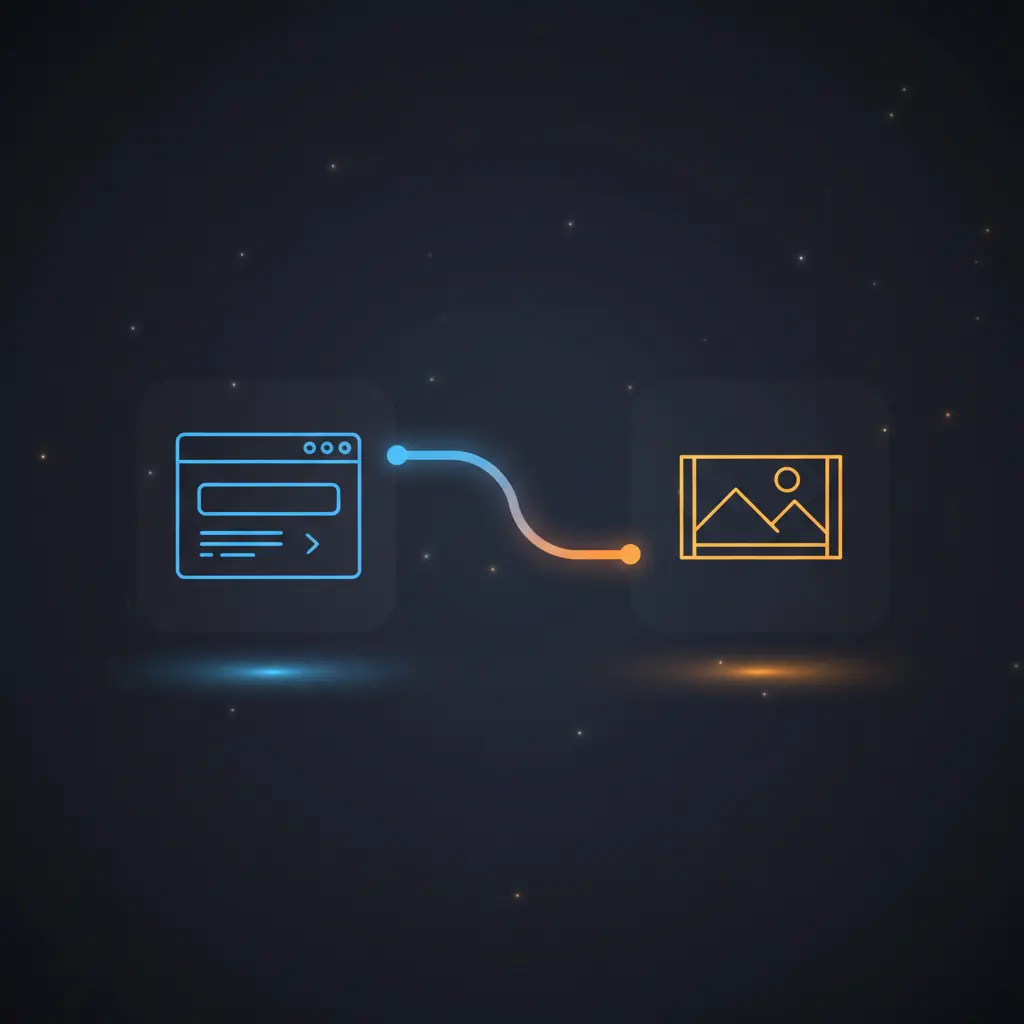
This image generation API automation workflow enables the conversion of text prompts into AI-generated images through a straightforward webhook interface. Designed as a no-code integration, it listens for HTTP GET requests containing URL-encoded prompts, then generates images by invoking OpenAI’s image generation model, returning results directly to the client.
Key Benefits
- Provides real-time image generation using prompt input via a simple HTTP webhook.
- Operates as a no-code integration requiring no backend development for image creation.
- Delivers image output synchronously, enabling immediate browser rendering of results.
- Supports flexible prompt formulation through URL-encoded query parameters.
Product Overview
This orchestration pipeline initiates with an HTTP webhook node configured to listen for GET requests containing an “input” parameter representing the text prompt. The workflow extracts this URL-encoded prompt and forwards it to an OpenAI node configured specifically for image resource generation using OpenAI’s DALL·E 3 model. Upon receiving the generated image in binary format, a Respond to Webhook node sends this data directly in the HTTP response, enabling immediate display in the user’s browser. The workflow executes synchronously from request receipt to response delivery, providing deterministic handling of each prompt-to-image request. No persistence or intermediate storage of data occurs beyond transient processing within workflow execution. By leveraging direct HTTP triggers and binary responses, this image-to-insight pipeline simplifies integration of AI-generated images into existing systems without additional infrastructure or manual intervention.
Features and Outcomes
Core Automation
This image generation API automation workflow accepts URL-encoded textual prompts through an HTTP GET webhook, then uses the OpenAI node to request an image creation based on the prompt. The workflow deterministically passes the prompt from the Webhook node to the OpenAI node, then delivers the generated image binary in one synchronous response via the Respond to Webhook node.
- Single-pass prompt processing from input to image output.
- Synchronous workflow execution ensuring immediate response delivery.
- Deterministic routing of prompt data without conditional branching.
Integrations and Intake
The orchestration pipeline integrates directly with OpenAI’s image generation API via an authenticated OpenAI node, triggered by HTTP GET requests received at a webhook. It expects prompts encoded as URL query parameters under the key “input.” There are no additional payload requirements beyond valid URL encoding of the prompt text.
- Webhook node receives HTTP GET requests with URL query parameters.
- OpenAI node connects to DALL·E 3 model for image generation.
- Authentication via configured OpenAI API credentials within n8n.
Outputs and Consumption
The workflow outputs the generated image as binary data directly returned in the HTTP response. This synchronous delivery allows the image to render immediately in a web browser or client application. The response contains standard image content types as returned by OpenAI’s API.
- Binary image data streamed back in HTTP response.
- Supports direct rendering in browsers without intermediate file handling.
- Output format corresponds to OpenAI’s generated image encoding.
Workflow — End-to-End Execution
Step 1: Trigger
The workflow begins with a Webhook node configured to listen for HTTP GET requests at a specified URL path. Incoming requests must include the “input” query parameter containing the URL-encoded text prompt for image generation.
Step 2: Processing
Upon receiving the request, the workflow extracts the prompt from the query parameter. There are no additional schema checks; the prompt passes through as-is to the next node for image generation.
Step 3: Analysis
The OpenAI node submits the prompt to the image generation API (DALL·E 3). This node operates in image resource mode, generating an image based on the prompt text. There are no conditional logic or thresholds applied; the prompt is sent directly for image creation.
Step 4: Delivery
The Respond to Webhook node returns the binary image data directly in the HTTP response. This synchronous delivery enables immediate viewing of the generated image in the client’s browser or application.
Use Cases
Scenario 1
A developer needs a simple way to generate AI images from text prompts without building backend infrastructure. This workflow provides a direct HTTP interface accepting URL-encoded prompts and returns images synchronously, enabling immediate integration with web or mobile applications.
Scenario 2
A content creator wants to automate visual assets generation by sending text prompts to a dedicated API endpoint. Using this image-to-insight orchestration pipeline, they can submit encoded prompts via URL and receive AI-generated images directly, streamlining their creative workflow.
Scenario 3
An automation engineer seeks to embed AI image generation into an existing workflow without coding complex integrations. This no-code integration uses a webhook that accepts prompt parameters and synchronously returns generated images, reducing development overhead and latency.
How to use
To use this image generation API workflow, deploy it within your n8n environment and activate the Webhook node. Obtain the webhook URL and append your desired prompt as a URL-encoded query parameter using the key “input.” For example, replace spaces with %20 and append “?input=your%20prompt” to the URL. Accessing this URL in a browser or API client will trigger the workflow to generate and return the corresponding image. Ensure the OpenAI credentials are properly configured to authorize API calls. Expect the response to be a binary image rendered directly in the client without additional processing.
Comparison — Manual Process vs. Automation Workflow
| Attribute | Manual/Alternative | This Workflow |
|---|---|---|
| Steps required | Multiple manual API calls and image handling steps. | Single HTTP request to webhook with prompt parameter. |
| Consistency | Variable due to manual input and API call errors. | Deterministic synchronous processing of prompt to image. |
| Scalability | Limited by manual throughput and integration complexity. | Supports automated, repeatable prompt-to-image generation. |
| Maintenance | Requires ongoing manual script and API management. | Low maintenance via no-code workflow and credential config. |
Technical Specifications
| Environment | n8n automation platform |
|---|---|
| Tools / APIs | OpenAI DALL·E 3 image generation API |
| Execution Model | Synchronous request-response workflow |
| Input Formats | URL-encoded text prompt in HTTP GET query parameter |
| Output Formats | Binary image data streamed in HTTP response |
| Data Handling | Transient in-memory processing; no persistence |
| Credentials | OpenAI API key configured in n8n |
Implementation Requirements
- Active OpenAI API credentials configured in the n8n environment.
- Accessible network environment allowing HTTP webhook requests.
- Proper URL encoding of text prompts appended as “input” query parameter.
Configuration & Validation
- Deploy and activate the workflow in n8n ensuring the Webhook node is enabled.
- Confirm OpenAI credentials are correctly set and authorized for image generation.
- Test the webhook by sending a HTTP GET request with a URL-encoded “input” prompt parameter and verify image response.
Data Provenance
- Webhook node (“Webhook”) triggers the workflow on HTTP GET request.
- OpenAI node (“OpenAI”) performs image generation using the prompt from query parameter.
- Respond to Webhook node (“Respond to Webhook”) sends binary image output to client.
FAQ
How is the image generation API automation workflow triggered?
The workflow is triggered by an HTTP GET request to the configured webhook URL with a required “input” query parameter containing the URL-encoded text prompt.
Which tools or models does the orchestration pipeline use?
The pipeline leverages OpenAI’s DALL·E 3 model via the OpenAI node to generate images from textual prompts.
What does the response look like for client consumption?
The response is binary image data streamed directly in the HTTP response, enabling immediate rendering in browsers or compatible clients.
Is any data persisted by the workflow?
No data is persisted; the workflow processes prompts and images transiently in memory and returns the output synchronously without storage.
How are errors handled in this integration flow?
Error handling relies on n8n’s default behavior; no custom retry or backoff mechanisms are configured within this workflow.
Conclusion
This image generation API automation workflow provides a reliable, synchronous method to convert textual prompts into AI-generated images via a simple HTTP webhook interface. By integrating OpenAI’s DALL·E 3 model within a no-code integration pipeline, it enables deterministic prompt processing and immediate image delivery without persistent data storage. The workflow’s operation depends on external OpenAI API availability and requires proper credential configuration within n8n. This solution streamlines AI image generation while minimizing infrastructure complexity and manual intervention.











Reviews
There are no reviews yet.