
Description
Overview
This image download automation workflow enables users to retrieve and save a remote image file locally through a manual trigger. This no-code integration pipeline simplifies the process of fetching binary data via HTTP and storing it on a designated file system path.
Designed for users requiring deterministic file retrieval without intermediary steps, the workflow initiates from a manual trigger node and processes an HTTP GET request to acquire the image as raw binary data.
Key Benefits
- Facilitates manual initiation of the download, providing direct control over execution timing.
- Handles binary file data natively, ensuring accurate and complete image retrieval.
- Automates local file storage, eliminating manual file saving and reducing human error.
- Integrates HTTP request and file system operations in a seamless automation workflow.
Product Overview
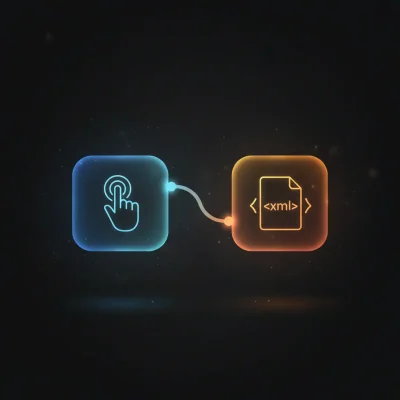
This image download automation workflow is triggered manually within the n8n environment by the “On clicking ‘execute'” manual trigger node. Upon activation, it sends an HTTP GET request to a fixed URL to retrieve an image file as binary data. The HTTP Request node is configured with a response format of “file,” enabling the workflow to handle the raw binary content correctly. Subsequently, the Write Binary File node saves the downloaded image to a specified local path on the user’s machine.
The workflow operates synchronously with a direct request-response pattern. It does not include custom error handling; therefore, it relies on the platform’s default retry and failure mechanisms. The workflow does not perform any data persistence beyond writing the file locally. No authentication or credential management is required, as the HTTP Request targets a publicly accessible resource.
Features and Outcomes
Core Automation
This orchestration pipeline accepts a manual trigger input and executes a single-pass HTTP GET request to download an image file. It deterministically routes the binary response to a file write operation, ensuring reliable file output.
- Single-pass evaluation from trigger to file write without intermediate transformations.
- Handles binary data natively to preserve file integrity.
- Deterministic execution order guarantees consistent output location and filename.
Integrations and Intake
The workflow integrates an HTTP Request node configured to fetch data from a public endpoint without authentication. The manual trigger provides the intake mechanism, initiating the automation pipeline when executed.
- Manual Trigger node for user-initiated execution.
- HTTP Request node configured for binary file retrieval.
- No authentication required due to public URL resource.
Outputs and Consumption
The resulting binary image file is synchronously saved to the local filesystem with a predefined path and filename. There is no asynchronous queuing or external delivery beyond local storage.
- Outputs a binary PNG file saved as “n8n-logo.png”.
- File location is explicitly defined on the local user’s desktop.
- File integrity maintained through direct binary write operation.
Workflow — End-to-End Execution
Step 1: Trigger
The workflow begins with a manual trigger node activated by the user clicking “execute” inside the n8n interface. This ensures the process starts only on explicit user command without external event dependencies.
Step 2: Processing
The HTTP Request node sends a GET request to a fixed URL to fetch the image. It expects a binary response and does not perform schema validation or data transformation, effectively passing the binary data through unchanged.
Step 3: Analysis
No conditional logic, heuristics, or data analysis are implemented. The workflow deterministically routes the binary payload from the HTTP Request node directly to the file writing node.
Step 4: Delivery
The Write Binary File node synchronously stores the received binary data as a PNG file at the specified local path. There are no additional delivery mechanisms or asynchronous processing steps involved.
Use Cases
Scenario 1
A developer needs to automate downloading a static image resource for local testing. This workflow provides a manual trigger to reliably fetch and save the image, eliminating repetitive manual downloads and ensuring consistent local availability.
Scenario 2
An operations team requires a simple integration pipeline to retrieve remote assets on demand. By triggering this workflow, they obtain the binary image file saved directly onto a designated machine, streamlining asset management without external tools.
Scenario 3
An automation engineer is building a no-code integration to demonstrate file handling capabilities. This workflow showcases binary data retrieval and local file writing in a deterministic sequence initiated by manual execution.
How to use
Import the workflow into the n8n environment and ensure file system write permissions are granted for the specified local path. To execute, open the workflow and click the “execute” button to manually trigger the process. The workflow will fetch the image from the configured URL and save it as a PNG file on the user’s desktop. Results can be verified by locating the file at the defined path after execution completes.
Comparison — Manual Process vs. Automation Workflow
| Attribute | Manual/Alternative | This Workflow |
|---|---|---|
| Steps required | Multiple manual steps: browser download, file save. | Single manual trigger followed by automated download and save. |
| Consistency | Subject to human error and inconsistent file naming or location. | Deterministic file naming and save location with binary data integrity. |
| Scalability | Limited by manual effort and user availability. | Scales to repeated executions without additional user input beyond trigger. |
| Maintenance | Requires manual oversight and updates per URL or path change. | Minimal maintenance; updates limited to node parameters if URL or path changes. |
Technical Specifications
| Environment | n8n workflow automation platform |
|---|---|
| Tools / APIs | Manual Trigger node, HTTP Request node, Write Binary File node |
| Execution Model | Synchronous, manual-triggered sequential execution |
| Input Formats | Manual trigger (no data input) |
| Output Formats | Binary PNG file saved locally |
| Data Handling | Binary data streamed directly from HTTP response to file system |
| Known Constraints | Requires local filesystem write access at configured path |
| Credentials | None required; public HTTP request |
Implementation Requirements
- Access to n8n environment with ability to run manual triggers.
- Local filesystem write permissions for the specified file path.
- Network access to the public URL hosting the image file.
Configuration & Validation
- Verify the manual trigger node is enabled and accessible for execution.
- Confirm the HTTP Request node URL points to a valid, accessible image resource.
- Ensure the Write Binary File node’s file path is writable and correctly specified.
Data Provenance
- Trigger: Manual Trigger node named “On clicking ‘execute'”.
- HTTP Request node configured for binary file retrieval from a public URL.
- Output: Write Binary File node saving “n8n-logo.png” to local desktop path.
FAQ
How is the image download automation workflow triggered?
The workflow is initiated manually through the n8n interface by clicking the “execute” button on the Manual Trigger node. No external events or inputs are required.
Which tools or models does the orchestration pipeline use?
The pipeline uses built-in n8n nodes: a Manual Trigger node, an HTTP Request node for retrieving binary data, and a Write Binary File node to save the file locally. No external models are involved.
What does the response look like for client consumption?
The workflow outputs a binary PNG file saved synchronously to the local file system at the specified path. There is no additional data transformation or response beyond the file write.
Is any data persisted by the workflow?
Data persistence is limited to the local file system where the binary image is saved. No other data storage or retention occurs within the workflow.
How are errors handled in this integration flow?
The workflow relies on n8n’s default error handling mechanisms. It does not implement custom retries or backoff logic within the nodes.
Conclusion
This image download automation workflow provides a straightforward, manually triggered pipeline to retrieve and save binary image files locally. It ensures deterministic handling of HTTP binary responses and reliable file writing without additional data processing or persistence beyond the local save. The workflow’s reliance on a public URL and local filesystem access defines its operational boundaries. By minimizing complexity, it delivers a clear example of integrating HTTP requests and file system operations within an orchestration pipeline for controlled file management tasks.
















Reviews
There are no reviews yet.