Description
Overview
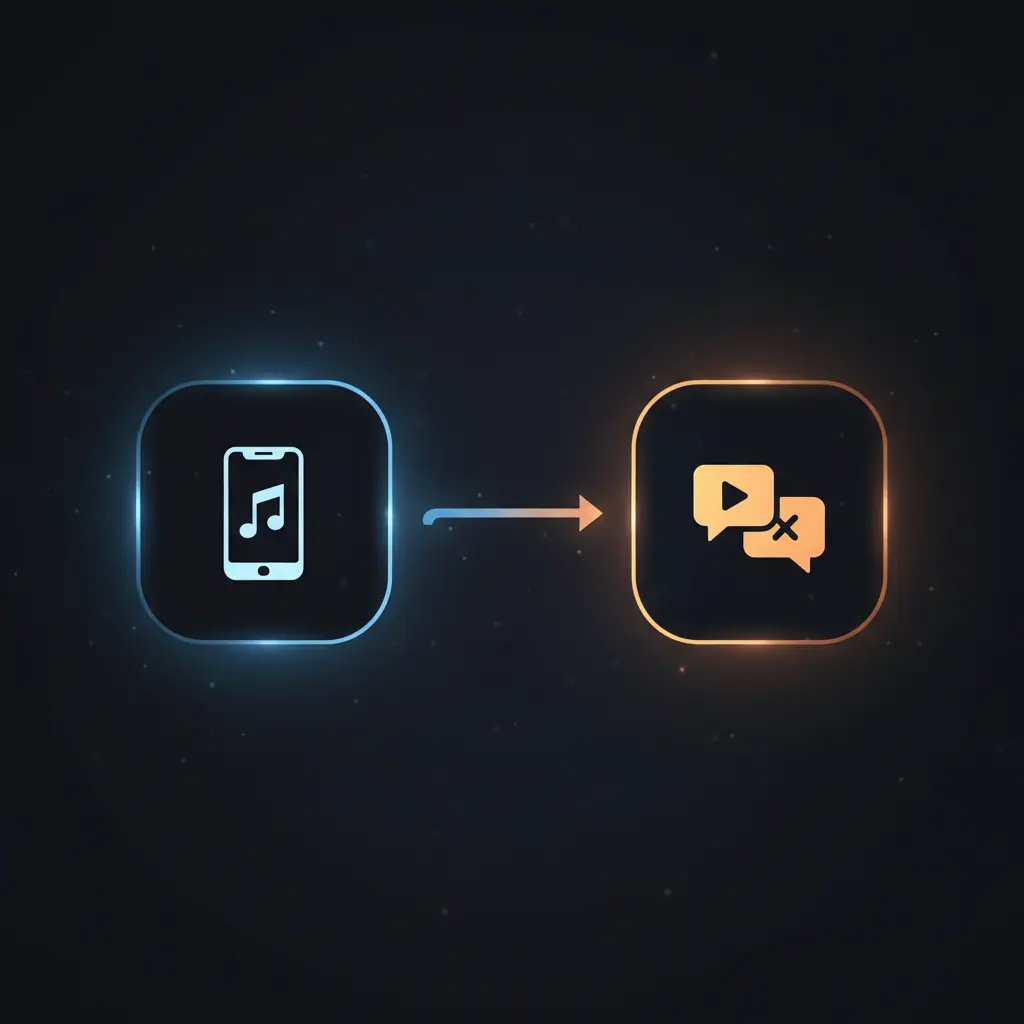
This automation workflow enables control of Spotify playback through Telegram messages by leveraging natural language understanding. Using a no-code integration pipeline, it translates user text input into actionable music playback commands via a Telegram trigger node.
The core functionality is initiated by a Telegram Trigger node, which listens for incoming messages to activate the orchestration pipeline. This setup targets users seeking conversational, hands-free Spotify control without manual app interaction.
Key Benefits
- Enables hands-free Spotify control through conversational Telegram message automation.
- Utilizes AI-powered natural language processing for accurate track and artist extraction.
- Automates music search and playback queue management with direct Spotify API integration.
- Provides real-time feedback to users by returning current playback status or error messages.
Product Overview
This automation workflow is triggered upon receiving a Telegram message, specifically monitoring message updates through the Telegram Trigger node. The incoming text is forwarded to an OpenAI node configured to parse and extract structured track and artist information from free-text inputs. The prompt instructs the AI to respond in a strict format for reliable downstream processing.
Following extraction, the workflow queries Spotify’s track search API with the parsed data, limiting results to one match. If a valid track ID is returned, the workflow adds the track to the user’s Spotify playback queue, advances to the next song, and resumes playback if paused. It then retrieves the currently playing track information to confirm the action.
Error handling includes conditional checks for track existence and fallback messages if a song is not found. The workflow returns either a success message detailing the now-playing track or an error notification back to the Telegram chat. Authentication relies on OAuth2 credentials for Spotify and API keys for Telegram and OpenAI, ensuring secure API communication without data persistence beyond transient processing.
Features and Outcomes
Core Automation
This orchestration pipeline processes Telegram text inputs to identify music tracks using AI-driven parsing and executes deterministic playback commands through Spotify APIs.
- Single-pass evaluation from message receipt to playback initiation.
- Conditional branching ensures appropriate handling of found and not-found tracks.
- Error continuation enabled on Spotify nodes to avoid workflow interruption.
Integrations and Intake
The workflow integrates Telegram for message intake, OpenAI for natural language parsing, and Spotify for music search and playback control, using OAuth and API key credentials.
- Telegram Trigger node listens for message updates with Telegram API key authorization.
- OpenAI node uses GPT-based language model to extract structured track data.
- Spotify nodes perform authenticated track search and playback commands via OAuth2 tokens.
Outputs and Consumption
Outputs consist of structured JSON messages sent back to Telegram, confirming playback status or errors. The workflow operates synchronously with immediate user feedback.
- Telegram message responses contain either now-playing details or error notices.
- Spotify API responses include track metadata fields such as name, artist, and album.
- All output messages are parsed and formatted for clear client consumption.
Workflow — End-to-End Execution
Step 1: Trigger
The workflow initiates when a new message is received in Telegram, monitored via the Telegram Trigger node configured to listen for message updates. This webhook-based trigger captures text inputs from the user chat.
Step 2: Processing
The Telegram message text is passed to the OpenAI node, which uses a prompt to extract artist and song names in a structured format. Basic text presence checks are performed before moving to the search phase.
Step 3: Analysis
The structured query is submitted to Spotify’s search API with a limit of one track result. An If node verifies the existence of a track ID to determine the success path. If no track is found, an error message is generated.
Step 4: Delivery
On success, the track ID is used to add the song to the playback queue, advance to the next song, and resume playback. Currently playing track details are retrieved and formatted into a confirmation message. This message or an error notice is then sent back to the Telegram user synchronously.
Use Cases
Scenario 1
A user wants to play a song without opening the Spotify app. By sending a song description via Telegram, the workflow extracts the track information, searches Spotify, and initiates playback, returning confirmation in the chat.
Scenario 2
When a user forgets the exact song title but remembers part of the lyrics or artist, they can describe it in Telegram. The AI parsing extracts key details, enabling precise song search and playback initiation in Spotify.
Scenario 3
Users seeking hands-free music control can use Telegram voice-to-text or typing to manage their Spotify queue remotely, with the workflow reliably handling requests and providing immediate status feedback.
How to use
To deploy this workflow, import it into the n8n environment and configure Telegram, OpenAI, and Spotify API credentials. Activate the Telegram Trigger node to receive messages from the designated chat. No additional setup is required beyond credential authorization.
Once live, users send music requests via Telegram text messages. The workflow processes inputs automatically and returns playback confirmation or error messages directly in Telegram, providing seamless conversational music control.
Comparison — Manual Process vs. Automation Workflow
| Attribute | Manual/Alternative | This Workflow |
|---|---|---|
| Steps required | Multiple manual steps: open apps, search, queue, play | Single automated pipeline from message to playback |
| Consistency | Variable; depends on user input accuracy and manual search | Deterministic parsing and API-driven track retrieval |
| Scalability | Limited by user availability and manual effort | Scales to multiple users via automated message triggers |
| Maintenance | High; manual intervention required for errors and updates | Low; automated error handling and API credential management |
Technical Specifications
| Environment | n8n workflow execution environment |
|---|---|
| Tools / APIs | Telegram API, OpenAI API, Spotify Web API |
| Execution Model | Event-driven webhook and synchronous response |
| Input Formats | Telegram message text |
| Output Formats | Telegram text messages with JSON-parsed content |
| Data Handling | Transient processing; no persistent data storage |
| Known Constraints | Relies on external API availability and valid user credentials |
| Credentials | Telegram API key, OpenAI API key, Spotify OAuth2 tokens |
Implementation Requirements
- Valid Telegram API credentials with webhook enabled for message updates.
- OpenAI API key with access to the GPT-based model for text parsing.
- Spotify OAuth2 credentials authorized for playback control and track search.
Configuration & Validation
- Confirm Telegram Trigger node receives live message updates from the target chat.
- Validate OpenAI node correctly returns structured artist and track information.
- Test Spotify nodes to ensure track search, queue addition, and playback commands execute without errors.
Data Provenance
- Telegram Trigger node initiates the workflow on message reception.
- OpenAI “Ask about a track” node extracts track and artist from message text.
- Spotify nodes perform track search, queue management, playback control, and status retrieval.
FAQ
How is the Spotify playback control automation workflow triggered?
The workflow triggers when a new Telegram message is received, using the Telegram Trigger node configured to monitor message updates.
Which tools or models does the orchestration pipeline use?
It integrates Telegram API for message intake, OpenAI’s GPT-based language model for natural language parsing, and Spotify Web API for playback management.
What does the response look like for client consumption?
Responses are Telegram text messages confirming the currently playing track or indicating if the requested song was not found, formatted from JSON outputs.
Is any data persisted by the workflow?
No persistent data storage occurs; all data is processed transiently during workflow execution without retention.
How are errors handled in this integration flow?
Conditional checks detect missing tracks and generate error messages; Spotify node errors continue without stopping the workflow, ensuring robust execution.
Conclusion
This automation workflow delivers deterministic control of Spotify playback through conversational Telegram messages, leveraging AI for natural language understanding. It reliably translates user input into structured search queries, executes playback commands via Spotify’s API, and reports status back to the user. The workflow requires valid credentials and depends on external API availability, which may affect operation if services are interrupted. Overall, it provides a precise, hands-free solution for music control using a conversational interface.















Reviews
There are no reviews yet.