Description
Overview
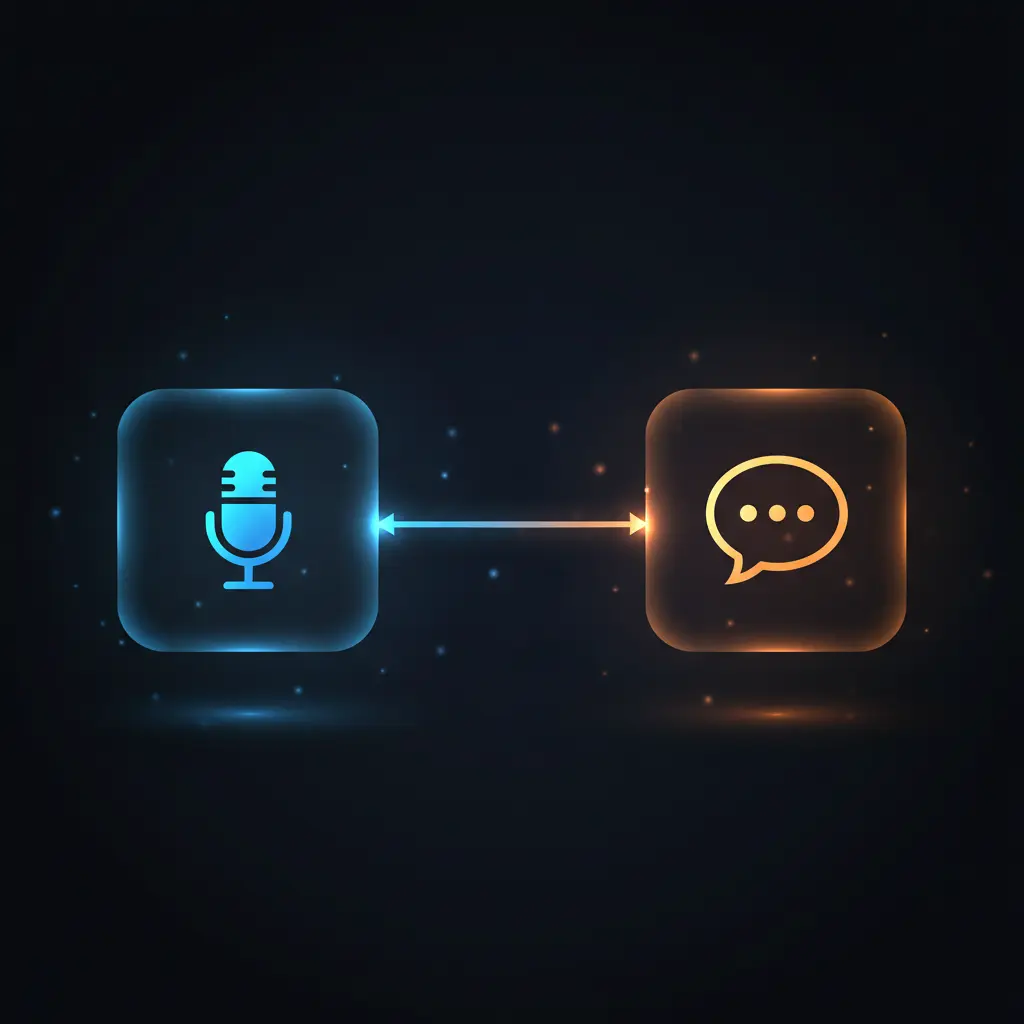
This voice interaction AI assistant automation workflow enables hands-free conversational queries via Siri on Apple devices, integrating voice commands with an AI conversational model. This no-code integration pipeline listens for Apple Shortcut triggers and processes spoken input through an AI agent configured for concise, voice-optimized replies.
Designed for users seeking voice-driven AI responses, it initiates with a webhook trigger receiving transcribed speech, then routes input through an OpenAI GPT-based conversational agent hosted on n8n, delivering synchronous voice-friendly output.
Key Benefits
- Enables natural voice queries via Apple Shortcuts with seamless Siri integration.
- Delivers concise AI-generated responses optimized for vocal output in real time.
- Incorporates dynamic context such as current date and time to enhance replies.
- Leverages a GPT-4o-mini language model for advanced conversational understanding.
- Provides synchronous response handling via webhook for immediate interaction.
Product Overview
This automation workflow begins with an HTTP POST webhook trigger configured to receive requests from Apple Shortcuts, which send transcribed user speech as JSON payloads. The workflow routes this input to an AI Agent node powered by LangChain, which applies a conversational AI agent configured with a system prompt to ensure responses are concise and voice-friendly. The AI Agent utilizes the OpenAI Chat Model node connected to the GPT-4o-mini model, supplying natural language processing capabilities.
Contextual information such as the current date and time in Berlin, Germany, is dynamically injected to inform the AI’s responses. The workflow processes requests synchronously, returning the AI-generated text directly to the webhook caller. Responses are optimized to avoid symbols or newline characters, ensuring smooth vocal delivery through Siri. Error handling defaults to platform standards without custom retry or backoff mechanisms. API credentials for OpenAI are required and securely referenced within the workflow. No data persistence occurs beyond transient processing during execution.
Features and Outcomes
Core Automation
This voice interaction automation workflow accepts transcribed speech input and applies defined conversational heuristics within the AI Agent node to generate concise, voice-optimized replies. It uses conditional logic embedded in the LangChain agent prompt to ensure clarity and brevity.
- Single-pass evaluation of input to generate immediate responses.
- Deterministic conversational output tailored for voice synthesis.
- Incorporates real-time contextual data like date and time dynamically.
Integrations and Intake
The orchestration pipeline integrates Apple Shortcuts as the intake mechanism via a webhook node configured for HTTP POST requests. Authentication for the AI model is managed through OpenAI API credentials using a secure credential node. The expected payload includes JSON with a required `input` field containing the transcribed user query.
- Apple Shortcut webhook trigger for voice-to-text input collection.
- OpenAI GPT-4o-mini model for natural language processing.
- Secure API key credential management within n8n environment.
Outputs and Consumption
The workflow produces synchronous text output formatted for immediate consumption by the Apple Shortcut caller. The response payload contains a single text field with the AI-generated reply, optimized for vocalization by Siri’s text-to-speech engine. No asynchronous queuing or external storage occurs.
- Plain text response delivered synchronously to webhook caller.
- Output field `output` contains voice-optimized AI response.
- Compatible with Apple Shortcut’s text-to-speech consumption model.
Workflow — End-to-End Execution
Step 1: Trigger
The workflow initiates upon receiving an HTTP POST request from an Apple Shortcut at a webhook node named “When called by Apple Shortcut.” The request payload must include a JSON body with the user’s transcribed voice input under the `input` key. This webhook acts as the entry point for voice queries.
Step 2: Processing
The input undergoes basic presence validation to ensure the `input` field exists. The data then passes unchanged to the AI Agent node, which formats the prompt by including the user’s input and contextual date and time information. No additional schema validation or transformations are applied.
Step 3: Analysis
The AI Agent node uses a conversational agent configured with a system message defining response style and constraints. It sends the prompt to the “OpenAI Chat Model” node, invoking the GPT-4o-mini model via API credentials. The agent generates a concise, clear textual reply, optimized for voice output by avoiding symbols and newlines.
Step 4: Delivery
The generated response is forwarded to the “Respond to Apple Shortcut” node, which returns the reply as plain text in the HTTP response body. This synchronous response is received by the Apple Shortcut, which triggers Siri’s text-to-speech functionality to vocalize the AI’s answer back to the user.
Use Cases
Scenario 1
A user needs hands-free access to information while driving. By invoking the voice interaction AI assistant automation workflow via Siri, they can ask questions and receive immediate, voice-optimized AI responses without distraction, enabling safer, more efficient information retrieval.
Scenario 2
Developers want to extend voice-controlled AI capabilities on iOS devices. This orchestration pipeline allows seamless integration of custom conversational agents, enabling natural language voice queries with context-aware replies that incorporate dynamic data such as the current date and time.
Scenario 3
Businesses require a voice-based AI assistant accessible on Apple platforms to automate customer support queries. This workflow provides a deterministic conversational interface that returns structured, concise responses in one synchronous interaction cycle, improving user experience and reducing support load.
How to use
To deploy this voice interaction AI assistant automation workflow in n8n, first configure the OpenAI API credentials in the “OpenAI Chat Model” node. Next, activate the webhook node “When called by Apple Shortcut” and copy its production URL. Import the provided Apple Shortcut on your iOS or macOS device, then replace the default URL in the shortcut’s HTTP request step with your webhook URL. Save and activate the workflow in n8n.
Invoke the shortcut by saying the configured Siri phrase, then speak your query. The workflow processes input synchronously and returns a voice-optimized AI response, which Siri vocalizes. Expected results are concise, context-aware replies delivered in a single interaction.
Comparison — Manual Process vs. Automation Workflow
| Attribute | Manual/Alternative | This Workflow |
|---|---|---|
| Steps required | Multiple manual steps including speech transcription and response formulation. | Single automated pipeline from voice input to AI response delivery. |
| Consistency | Varies with human accuracy and response quality. | Deterministic output based on configured conversational agent prompt. |
| Scalability | Limited by human availability and transcription speed. | Scales with n8n and OpenAI API capacity without manual intervention. |
| Maintenance | Requires continuous human training and availability. | Requires API credential updates and workflow adjustments only. |
Technical Specifications
| Environment | n8n automation platform with Apple Shortcuts on iOS/macOS |
|---|---|
| Tools / APIs | OpenAI GPT-4o-mini model, LangChain AI Agent, Apple Shortcuts webhook |
| Execution Model | Synchronous request–response via webhook |
| Input Formats | JSON HTTP POST with `input` field containing transcribed text |
| Output Formats | Plain text response optimized for voice output |
| Data Handling | Transient processing; no data persistence |
| Known Constraints | Relies on availability of OpenAI API and Apple Shortcuts infrastructure |
| Credentials | OpenAI API key securely stored in n8n credential node |
Implementation Requirements
- Valid OpenAI API credentials configured in the “OpenAI Chat Model” node.
- Active n8n instance accessible via public URL for webhook reception.
- Apple Shortcut installed on iOS/macOS device configured with webhook URL.
Configuration & Validation
- Verify OpenAI API key authentication by testing the “OpenAI Chat Model” node independently.
- Confirm webhook node is reachable and accepts POST requests with JSON payload including `input` field.
- Test end-to-end voice query flow using the Apple Shortcut to ensure synchronous receipt and vocal response.
Data Provenance
- Trigger node “When called by Apple Shortcut” receives voice input via webhook HTTP POST.
- “AI Agent” node (LangChain agent) processes input using a system prompt with contextual date/time.
- “OpenAI Chat Model” node invokes GPT-4o-mini language model using stored API credentials.
FAQ
How is the voice interaction AI assistant automation workflow triggered?
It is triggered by an HTTP POST webhook named “When called by Apple Shortcut,” which receives transcribed speech input from an Apple Shortcut.
Which tools or models does the orchestration pipeline use?
The workflow uses the LangChain AI Agent node paired with OpenAI’s GPT-4o-mini model for natural language understanding and generation.
What does the response look like for client consumption?
The response is plain text delivered synchronously in the webhook HTTP response, optimized for Siri’s text-to-speech vocalization.
Is any data persisted by the workflow?
No, all data is processed transiently within the workflow; no input or output data is stored persistently.
How are errors handled in this integration flow?
The workflow relies on n8n’s default error handling without custom retry or backoff; failures result in standard HTTP error responses.
Conclusion
This voice interaction AI assistant automation workflow provides a deterministic and synchronous pipeline for converting Apple Shortcut voice queries into concise AI-generated spoken responses. It integrates transcription input with a GPT-based conversational agent hosted in n8n, enriched with dynamic contextual data such as date and time. The workflow requires valid OpenAI API credentials and depends on the availability of both the OpenAI API and Apple Shortcuts platform. By automating voice query handling end-to-end, it eliminates manual transcription and response formulation, ensuring consistent, voice-optimized dialogue delivery without persistent data storage.












Reviews
There are no reviews yet.